All posts by mike

Charting Your Course the Millennial Way

August 31, 2018

It’s an act of “adulthood” to move beyond the plan in your head and heart, to a plan of action for charting your course in life. For many in the rising generation, the act of planning is delayed by a fear of being hemmed in. They want their lives to be as free flowing as possible.

Part of their hesitation is if they make a “life plan,” they could be committed to a path that may be hard to change, or even re-start. Often the launch on their charted course is delayed while they figure out a plan that allows for progress but isn’t too limiting. Many in the older generations have mocked this delay, and yet, this journey is so sacred, all generations should respect this space and the way it is being carved out by each succeeding generation.

Making “plans for life” is better that making a “life plan.” It allows for more free-flowing options along the way. I know of folks who have planned every aspect of their life in detail and have followed that plan with great precision. They live by a comprehensive calendar and are wound up as tight as a garage spring. Perhaps it works for them, but that path doesn’t work for most of the rising generations for a variety of reasons. I respect the fact that Millennials and Generation Z want to create a life of meaning and be able to tap into their passionate desires while keeping all options open as life progresses.

Let’s consider a planning process that embraces the “Millennial Way.” Charting your course and creating your future ought to include a few things that will get you flying in the right direction. I’ll use a personal aviation analogy to make my points.

Envision the Path Before You Take Off

Years ago, when I was a pilot and had a small plane, I took a trip to Nebraska. Before I took off for the flight from Fort Collins, Colorado to O’Neil Nebraska, I studied the aviation map, weather, and was prepared to recognize waypoints along the way. I knew the course heading I would initially take. Once in the air, things would look different, but for now I was prepared for takeoff. When we spend time to meditate upon our futures and the course we want to take, the mind starts to prepare the heart and soul for the journey. This process is known as visualization and is used by athletes and thought leaders to project their passion and “will” this passion into the act of living into their dreams.

Align Your Vision

While creating your OWN future is paramount in charting your course, two key elements ought to be considered in the process. First, have you developed your core values and decided that whatever path you take, those core values are the center of your navigation? If not, start there, first. If you have started this process, then get in the airplane and prepare for flight. Your core values are your flight safety check before takeoff.

Second, recognize the journey you take is not just your own. Your life affects and is affected by those around you—so chart a course that is appreciative of this. Not only does your path affect those around you (otherwise, how could you change the world for the better?), it also is connected to your ultimate destination after this life. This is a truism that makes all good things possible. The God or Supreme Power of the universe is aware of you and is ready to assist in your journey—-which is most likely to happen as you attempt to align your will with His.

Begin Painting with Broad Stokes as You Establish Waypoints

In my early flying days, we didn’t have GPS. We used more antiquated instruments, and also held in our lap an aviation map to recognize things that were visible from ten thousand feet—-railroad tracks, water towers, roads, airports, etc. When I left on my flight for O’Neil Nebraska, I could see on the map where it was. It was about an hour and a half flight. Once I hit my cruising altitude of 10,000 feet, I felt pretty much aligned with my destination.

Then things changed. While my instruments seemed reliable, the visuals I was supposed to be seeing along my path were not evident to me. I quickly had a flying companion looking for landmarks, all the while descending to the destination airport that by now should have been visible. Thankfully, we had one major landmark that could not be mistaken – a large river. I knew the destination airport was next to the river. I headed north and followed the river. I didn’t see the airport yet, but knew it had to take me there. Sure enough, within a few minutes I saw the airport, lowered the landing gear, and landed just before dark.

Think of that landmark, the large river, as representing painting your course with broad strokes initially, and then filling in the details along the way. Consider developing an oil painting. Starting out, a canvas may be covered with base paint, or thick strokes of paint to represent the blue sky, or the brown earth. Then the puffy clouds are painted over the blue sky, or trees or grass over the brown landscape, and so on. Eventually the full picture appears, but not until the finer details have been painted in along the way. The painting all started with broad strokes and foundational colors.

Fly!

While learning to fly, my instructor said repeatedly, if something goes wrong, keep flying the airplane. I was in near panic stage while trying to find my Nebraska destination. My flying companion was perhaps in a worse mental state.  My altitude was low, I was low on fuel, the landing gear warning horn was blaring in my ear—meaning I had descended to pattern altitude of 1000 feet and was supposed to put the landing gear down— and it was getting dark.

So many things can change as we fly the course we have charted, but if we can stay aligned with the vision and keep moving forward, the destination is likely closer than we think. The broad strokes we paint in our course will be become the visible landmarks that get us there. The destination could be just another waypoint along a continuous path of progression —another reason to paint initially with broad strokes and allow the inner voice  to help us with the finer points along the way.

So let’s allow a space for Millennials, Generation Z, and everyone to chart their own unique course without coercion, giving each individual an opportunity to discover their path, even if the path is visible for only a few steps at a time.

For more on this topic, see chapter 4 in Launching Leaders: An Empowering Journey for a New Generation.


The End of Living in Chaos, The Beginning of Personal Peace

August 3, 2018

It’s not uncommon in today’s world to segment aspects of our lives. Compartmentalization is the buzz word of the day, but I have an even better buzz word to chew on…..CONGRUENCY.

In many countries on four continents, Launching Leaders has worked with groups of 20 and 30 somethings, and one of the things we’ve noticed is some are adamant that our spiritual and professional lives should never intersect. They could perhaps be parallel aspects of a person’s life, they say, but the spiritual and professional are still fundamentally different and distinct.

The thought is that since the different facets of our lives carry different expectations, responsibilities, and social interactions, we need to mold and change our behavior according to what we’re doing, where we are, and who we’re with.

In some ways, this approach makes sense. For example, when you go to your place of worship, worshipping openly and publicly is not only appropriate, but also helpful and productive. At work, though, it’s probably more appropriate to say a silent prayer to yourself, or to find a private place. These kinds of adjustments will help you be a socially aware and more sensitive person. But more fundamental than making slight adjustments to behavior, is the belief by many that the best way to approach life is to see it as a collection of separate threads that are so inherently different from one another that they should never intersect.

In contrast to this approach is the idea of developing a congruent life, which is both fulfilling and refreshing; a release if you will into a more authentic and holistic life. When we try to break our lives down into distinct segments, and then try to become a different person for each one, what we’re really doing is introducing all sorts of gaps into who we are and how we’re trying to live. Attempting to straddle these gaps by living with a foot on each side of the divide causes conflict and incongruence.

It also fails to recognize that the same principles of respect, honor, kindness, professionalism, and courtesy do in fact apply across the board, whether it’s our attempts to be a good businessperson, a good friend, or a good person in general.

The conclusion, as determined by Millennials who have taken the Launching Leaders course, is rather than trying to break their lives apart into multiple segments, they should try to live a more unified, consistent, and Godly life. This powerful commitment applies to all generations and will put us on the path toward true happiness and success. Regardless of our social or economic status, congruency will bring us peace.

Whether we live a congruent or compartmentalized life, the choice is intentional. Let me explain this through my experience with sailing. When I first learned to sail, I learned about something called the “tiller.”

The tiller is a long-curved handle attached to the rudder. It is primarily responsible for controlling the direction of the boat. When you push the tiller to one side or the other, the rudder steers the boat in that direction.

While sailing, the boat’s movement is very sensitive to the activity of the tiller; you can literally feel this sensitivity in your hands. To maintain control of the sailboat, you must keep your hand on the tiller at all times. If I ever had to leave my post to unfurl a sail or to take care of something else not within my immediate reach, I’d use a rope to tie the tiller in place. This would allow the boat to keep moving in the right direction for the minute or so that it would be unattended, but as soon as I’d completed whatever task had pulled me away, I immediately return to my seat at the tiller.

When the sails were properly adjusted and the tiller was steady in my hand, everything clicked into place and the harmony of it all was amazing. In those moments, I was moving swiftly in the direction of my charted course. If I were to suddenly let go of the tiller, everything would quickly fall apart. The boat would turn directly into the wind, the sails would flutter, and I would be dead in the water—or worse. Letting go of the tiller and the mainsheet for a brief moment was OK, but it wouldn’t take very long at all for my progress and direction to come to a sudden halt.

In life, as in sailing, it’s essential to always keep your hand on the tiller to ensure that you’re moving in the right direction. When you fail to keep all aspects of your life in harmony with the values and principles that are most important to you, you’re taking your hand off the tiller that guides your life. When you fail to consistently live your values and principles, you’re leaving your fate to the winds. In contrast to this directionless floating, living a congruent life will enable you to keep your hand on the tiller so that you’re steadily progressing toward your most important life goals.

It’s important to understand that when you take your hand off the tiller, you haven’t accidentally lost control; you’ve deliberately relinquished control. Keeping your hand on the tiller requires conscientious effort. It takes hard work to consistently be the same person at all times and in all places, especially when no one is watching. Letting go can seem so easy, but once you give up control of the tiller, you’ve left yourself at the mercy of the wind and the waves.

Psychologists have said that trying to juggle different standards and lifestyles like this can create significant stress and harm. Trying to be one person in one setting and a very different person in another setting will eventually force a person to keep secrets, tell lies, and deceive others. This creates powerful feelings of shame and guilt. The longer a person tries to maintain a segmented life, the deeper they get pulled in, and they eventually end up developing two or more different selves who act in completely opposite ways. Some of these selves do things that are markedly different from that person’s “apparent” lifestyle. This juggling act is extremely difficult and stressful to maintain, and sooner or later, lying takes over that person’s entire life.

But this kind of double life doesn’t only harm the person trying to live it; it also hurts all the people they lie to and deceive along the way. Duplicitous living creates an ever-widening path of harm that affects a huge number of people. This actually becomes an unethical practice and goes against the grain of being an ethical person which the rising generations hold dear.

Clearly, the kind of segmented life the world thinks is OK is not sustainable in bringing our lives in alignment with both our personal ethics or God’s will. Truly, there can be no duplicitous living if we desire the type of divine guidance, blessings and peace we seek.

Once you decide to live a life of congruency, a deep sense of trust, respect, peace, integrity, and abundance will follow. This topic has been a favorite discovery from Millennials who have taken the Launching Leaders course and read the Launching Leaders book in various parts of the world.

The great American writer Mark Twain once said, “The best thing about telling the truth is you never have to think about what to say.” The same can be said of living a life that is free of divided standards. When you remain consistent in your standards and values across all aspects of life, no one will ever question where you stand.

Living a congruent life does not mean perfection. Far from it. The key to peace however is to STRIVE to live within the core values we have established and to be the same authentic person in every phase of our lives. Congruency replaces chaos with peace, it replaces darkness with light, and it replaces discouragement with hope.

Are you living a double life or a congruent life? Consider these factors (click on this link):  double-life_congruent-life

Core Values, Your Flight Safety Check

July 9, 2018

One of the great attributes of the rising generation is their desire to live a life of good ethics. While everyone wants to have a center from which they operate, a center that is the root of who they are or want to be, actual development and articulation of these core values (ethics) are rare. Ask anyone if they have a core value statement, and the answer will almost always be no.

The idea of wanting to just be a good, honest, and upright individual is a good baseline, but unless these attributes are outlined with some clarity, they will be as shifting sands, subject to the winds of life. There are certain things in life that must be articulated to be made legal—such as wills or a power of attorney. Though not binding as a legal document, a core value statement has a measurable impact on who you really are.

When I flew airplanes, it was protocol go through a run-up checklist before entering the runway for takeoff. It was there I would test such things as the magnetos, oil pressure, fuel systems, prop, flaps and radio, to name just a few. Many times a private pilot taxis back to the hanger after a run-up, rather than enter the runway for takeoff with any question of performance capabilities. Little things that don’t check out can become a life or death situation at a thousand feet. It’s better to be sure about the aircraft before flying. In many ways, establishing core values becomes our safety check as we live out every new day.

Establishing core values is a process that should not be rushed. You wouldn’t do a run-up before take-off without having taken the time to learn to fly first (though I have a story to tell about that someday). The process is dynamic. To the liking of young adults, what is created, while foundational, doesn’t have to be set in stone. In other words, you can sharpen and shape your core values over a lifetime. Let’s consider five simple steps in this process:

  1. Find uninterrupted space. Find a spot that speaks peace to your soul and detach from the world. Make this a spot where you can feel centered, and where you can THINK about the characteristics you desire to shape your life.
  2. Think and ponder. Daily mindfulness is such a part of becoming who you desire to be. This is a practice that becomes a part of every successful person’s life. The process of thinking and pondering is referred to by the French scholar Pierre Hadot as “spiritual exercises composed to provide a momentary stay against the stress and confusion of everyday life.” In this realm consider the path and journey you are walking.
  3. Write it down. Write down key attributes of the ideal self you envision.  Think on these attributes for a period of time and make them the center of your core values statement.  Practice this exercise in three steps.  I’ll use the attribute of being authentic as an example:  1. Define the attribute (as you define it); “Authenticity is being true to yourself and God,” 2. Place this in an active statement; “I desire to live my life in an authentic and congruent way, so there is never confusion of who I really am,”and 3. Include a positive affirmation; “I am an authentic person.”  From this and other attributes you identify, you could rank order your attributes, and from that draft your own unique core values statement.
  4. Does it align? The reason core values and ethics are important in life is that they create a world wherein the good of all can be synergized. You might ask, “What should my core values align with?” All good that lasts, stems from the fountains of God—do your core values align with both your purpose and the purpose God has intended for you?

While this process may seem simplistic, it can obviously start a journey that requires considerable thought and time. We have had many Millennial participants in the Launching Leaders course and readers of the Launching Leaders book comment on how this practice has changed their lives.

When your actions of the day stem from the core of who you are and are trying to become, then you are cleared for takeoff.  Every journey begins here.

For more on core values, watch this 2-minute video from the Launching Leaders online course:

To Lead Millennials, Come Along Side Them

July 3, 2018

Op-Ed Article that Appeared in Deseret News on June 29, 2018

Millennials (20-30 somethings) are often criticized by older generations as being entitled, lazy, and self-absorbed. Boomers like myself are known to castigate them for pushing against the status quo and tradition. Indeed many in the rising generations push hard against hierarchy. But, they also yearn to do something that makes a difference. They pride themselves on being non-judgmental and many simply don’t want to be hemmed in. They want to create their OWN future.

Wouldn’t it be well for older folks to stop and consider what younger generations bring to humanity? If we took the time to better understand their hearts and stopped mischaracterizing, we would likely applaud many principles they embrace. The alternative is to continue being puzzled by them, or worse, calling them names. It may be wise to give ourselves a wakeup call and ask: Who raised them?

As a former religious leader with responsibility for young adults, and an employer of over 10,000 Millennials over my lifetime, I have a deep love and respect for the rising generations. Rather than adopt the negative labels used to reference them, I have gained an entirely different perspective. I want to thank Millennials for so many things.

I thank them for their creativity, their concern for our world, and for asking questions. I thank them for desiring to create an inclusive culture, for creating innovations in technology, for being global thinkers who are adventurous, and for being motivated by meaning and purpose. I also thank them for their hunger to learn, their sense of optimism, for seeking work-life balance, and for prioritizing experiences over rote education.

It is true, the rising generations (like every other generation) have challenges; some significant. One particular challenge has been active religious practice. According to studies in the United States, nearly 60 percent of Christian, 30 percent of Jewish, and 25 percent of Muslim young adults enter a religious hiatus of some sort. In fact, many Millennials (and increasingly Generation Z – teens) characterize themselves as “spiritual, but not religious.”

Another label? Let’s stop and consider what “spiritual but not religious” means in the life of a Millennial. Many are finding less fulfillment in religious worship because they believe the bureaucracy of it smothers the spiritual benefits. They don’t appreciate judgment or being judged, which they believe is more aligned with religion than spirituality. In many cases, they are simply trying to chart their own course as they consider how their own up bringing shaped them, while grappling with the world they live in today.

If one makes an effort to learn the language of the new generations, a bridge can be built for mutual understanding. So I propose that we not try to “fix” them by pushing, pulling, or forcing them. Rather, let’s come along side them.

To “come along side” is to:

  • Make wise and loving invitations. Help them find and choose their path.
  • Assure your invitations will help them make a difference. They don’t want to just put in their time; they want who they are, and what they do, to make a difference in the lives of others.
  • Consider the concept of empowerment. It’s an approach to take as you assist in their journey of discovery.
  • Celebrate outcomes as they embark on their endeavors, even if the outcomes are not quite what you expected.

To come along side is to walk a path together. My hope is that, together, we can find a new synergy resulting in true empowerment for all of us.

Head of the Spring

April 2, 2018

I grew up in a log cabin, remodeled over the years. It started out being a one room cabin with a dirt floor and an outhouse. Then came indoor plumbing and additions to include a modern bathroom (modern compared to the outhouse at least). My parents bought this home for $1,000 when they got married. It’s the only home our family ever knew. It was small; but with an addition of three bedrooms, a bath, and a few other updates over the years, our family of seven never felt deprived. We had a “boys” bedroom, with two queen beds and four boys; the slanted ceiling addition was lower than 6 feet. Both beds were broken over the years by rambunctious pillow fights. My only sister and parents had the other two bedrooms.

In the early days, water had to be hauled to the home and we drove to the mountains to a place called Five Springs. There the pure water came out of the granite filters and we filled our drinking water containers. Even though we later got running water, we still drove to the springs to bring home the fresh water whenever possible because it tasted much better to us than the chlorinated stuff that came out of the plumbed water system.

I relate this upbringing to talk about my mentor, Jim Ritchie. I adopted him as a mentor over 35 years ago—he graciously accepted my request. He retired at age 35 and has been teaching Launching Leaders principles since that time from New Zealand to Africa and everywhere in between. He is now in his 70’s and still going strong. He has given back in this way with his wife Carolyn, and is beloved by the thousands who have taken his classes and have been transformed from the empowering principles taught therein.

In 2008 he was the central figure and founding member of Launching Leaders, which has now become a world-wide endeavor. I have been honored to assist my mentor in this journey. If the founding principles are akin to the log cabin I grew up in, they are timeless in their benefit, and much of what we need.

The messages of Launching Leaders have been shaped and honed to address the rising generations in a unique way. The curriculum is now online, packed with relevant videos, all of which engage and empower in a very unique way—-inviting the inclusion of faith (whatever your faith is) with leadership principles. Unique also in that our organization celebrates Millennials and desires to come along-side them in this journey.

Jim is akin in my mind to the log home I grew up in, and the spring we gathered water at. That log home has two foot think walls and still stands firm today—with all of its additions. The additions of principles and materials over the years are only successful because of the foundations that Jim laid over a life time. Like the cabin, they stand the test of time. As Jim travels the world teaching Launching Leaders today, he isn’t using the high tech deliveries available to him, he is letting the students drink directly from the fountain—the well spring of principles that we teach. He is figuratively taking them to the mountain for a drink of the most empowering principles, taught in only the way our original founder can.

Jim is as much as a gem as the fresh water coming out of the granite mountain, as firm as the cabin I grew up in—-the best ambassador that Launching Leaders could ever hope to be partnered with—-which only makes sense since he started all of this.

Be empowered by the Launching Leaders curriculum, but if you do ever get an opportunity to come to the mountain and drink straight from the spring (Jim Ritchie), don’t miss that opportunity.

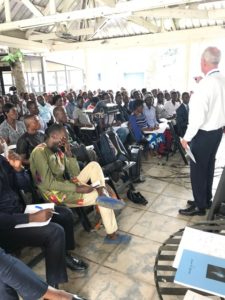
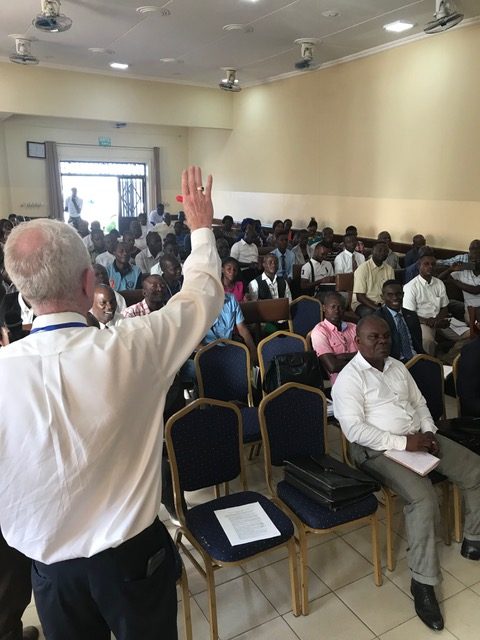
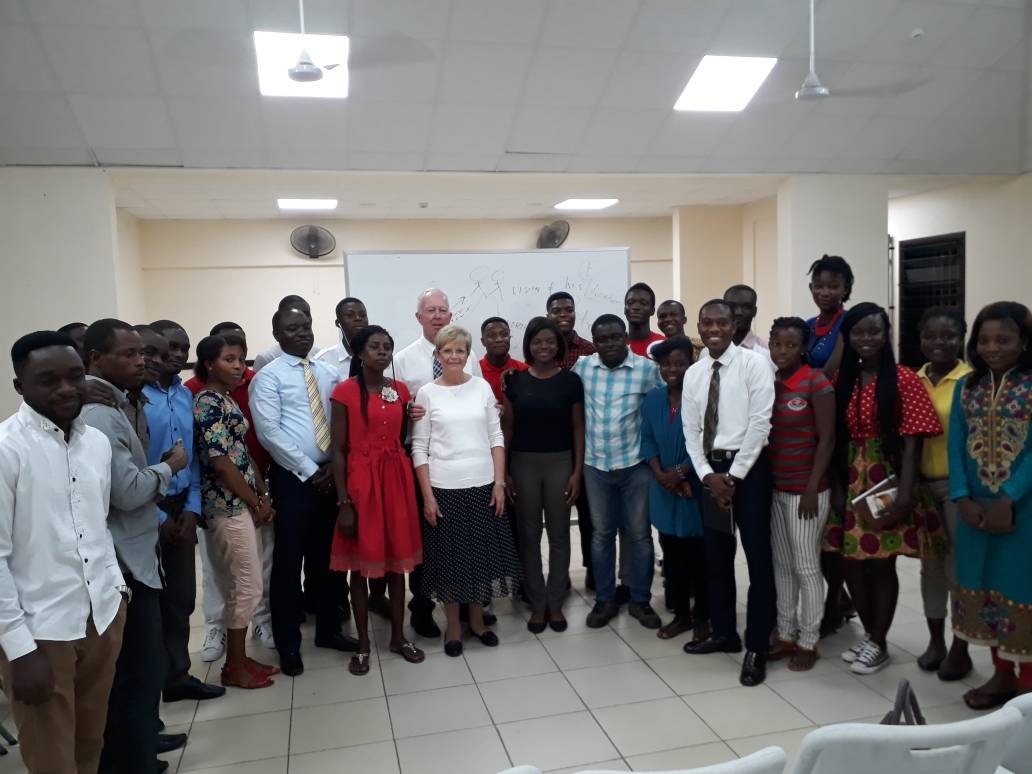
I am proud to be a part of this journey with my mentor. Adjacent and below are recent photos that show him teaching hundreds who gather to drink from the fountain of our beginnings. Here’s to the well-spring of principles that he continues to teach and the solid foundations on which they are built.

Thanks my friend.

Korea: A Lesson of HOPE and PEACE

March 29, 2018

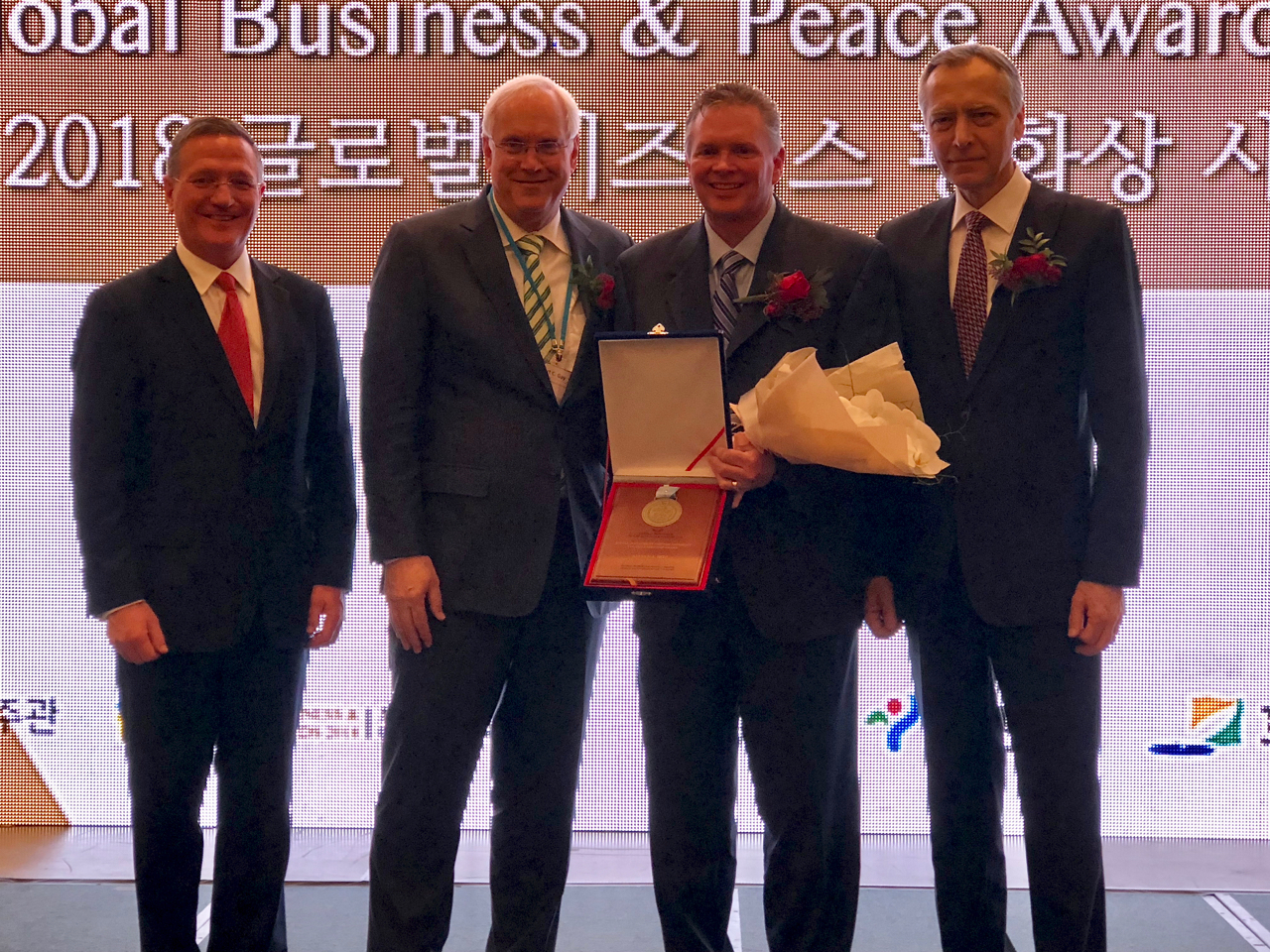
Recently, some of us from Launching Leaders attended the Global Business & Interfaith Peace Symposium and Awards in Seoul, Korea, where I represented our team in accepting a medal for excellence in youth leadership. Our conference was attended by heads of state, including the past prime minister of Japan, Yukio Hatoyama, and the UN Former Secretary General Ban Ki-moon (the current honorary chairman of UN Global Compact Korea), Korean congressmen and the minister of foreign affairs and the equivalent of the leader of the house of South Korea, along with many other dignitaries. This event is always held between the Olympics and the Para Olympics in the country in which they are held.

In advance of this award and event, a newspaper reporter asked me what this medal represents, and in an indirect way, why are we receiving it? Perhaps he wasn’t the only one who is wondering; so let me explain my perspective. The award recognizes contributions to interfaith understanding and peace. Launching Leaders has a proven track record of bringing together groups of many faiths and witnessing them apply their own faith toward the principles taught, and emerging with a bigger heart for peace, tolerance, and hope in the human spirit. I believe this is what we are being recognized for; the unique application of principles and faith and its relationship to interfaith peace and understanding.

Our experience in Korea was humbling as well as empowering. The morning of the conference, the headline and giant photo on the newspaper was of the South Korean delegation shaking hands with Kim Jong- Un. Can you imagine the elation and the feeling of HOPE that was there? To see this hope in a nation that has lived with conflict and tension for centuries was a sweet experience and very palpable.

While there, we went to the National Assembly in Korea—their version of congress, where they awarded the Global Peace Prize. It was awarded to Brian Grim, President of the Religious Freedom and Business Foundation, with whom we partner on interfaith initiatives. During this ceremony, the leaders of nations, and of varied faiths and religions, forming a line for press photos, and spontaneously stood in front of the assembly and clasped their hands as they sang with a HOPE like never before, the Korean song of reunification.

In addition, a very touching moment came when the former Japanese Prime minister stood before the Korean people and expressed a sincere apology for the atrocities of his nation on the Korean people during the years of war. He said “We will say I’m sorry until there is no need to continue to say ‘I’m sorry’.” Think of this, an apology that stands as long as it is needed to heal the wounds of the past.

These are just a couple of the experiences that literally changed us, and that reminded us that peace begins in the heart. Global peace can best start with inner peace; and this is best grown from the establishment of knowing your true identity, developing core values, good habits, and a desire to be a positive part of a holistic world. This is the essence of Launching Leaders.

Amidst the atmosphere of hope and elation during this conference, stood in the background the cloud of tension this country and people have lived with for generations. With this and recent US events surrounding tragedy and chaos (school shootings, etc.) in mind, a reporter asked me this question:

In your blog you said that “It is NEVER too late to make a difference”. Yet, watching the news it seems it is already too late. Why should we even try?”

Ironically, as I pondered this question and the dark conclusion of “why should we even try?” it was clearer to me than ever before that the work we are involved with, including those we partner with are relevant for our times.

I responded, “It is amazing how much influence ONE good person can have. Yes, we live in a very troubled world, but if you could see what I see as a result of those who graduate from our courses, you would have a lot of hope for our future. Think of our Pakistani Catholic student, who feared religious persecution in her homeland before fleeing to England—-where our course was being taught at the Catholic Chaplaincy in Manchester.   And then to find in her Launching Leaders class a variety of faiths including Muslims. Watching her learn that all people yearn for the same things (peace, acceptance, understanding, love, tolerance, and so forth— the principles and values that LL taught them to explore were not religion specific, but universal), and to participate then in a culminating class service project (idea resulted in their class), which was to paint the local mosque. To see her learn empathy for her Muslim classmates who were experiencing their own forms of persecution—–Think of this TRANSFORMATION. It’s NOT too late—-it’s NEVER too late to live into a higher purpose and to change the world for the good as we do so. As long as ONE person can experience change that brightens their life and view of it—it’s not too late.”

It is with gratitude we accepted the award, and invigorated our purpose to a new level. Remember, there are NO coincidences. We can all make this world a better place.

The Global Business & Interfaith Peace Symposium and Awards is initiative of the Religious Freedom & Business Foundation, in collaboration with the United Nations Global Compact Business for Peace platform, the Global Compact Network Korea, and the United Nations Alliance of Civilizations.

Millennial Money, Keys to Entrepreneurship (The Millennial Way) – Part 2

September 27, 2017

Welcome to part 2 of this post. If you missed part 1, click here.

Becoming an entrepreneur is the hot “new profession.”  It’s all I’ve been for the past 30 years, and the reason I jumped into this profession is because of the same concerns our Millennials have—-so I can relate on a very personal basis.  While education is a MUST for success, accredited education is not the only path.  Did you know that just over half of business owners have a college degree?

I am in the camp of highly educated but not accredited.  I am in good company (i.e. Walt Disney, Simon Cowell, Henry Ford, Michael Dell,  etc.).  However, I will explain in the entrepreneurship book I am writing (by the same title as this blog post), why even though I don’t believe a college degree is necessarily a factor in entrepreneurial success, I still believe a college degree is more than a worthwhile endeavor—-you will find out why not getting the sheepskin is one of my regrets.

Here are three of many keys we will explore in the new book:

  1. Purpose:  Once you establish your purpose—your calling—-your passion—-then you will know how to construct your entrepreneurial endeavor.  If it’s about the money, your life will be as empty as your bank account; if it’s about the purpose, then the reasons behind your venture will fill the gaps—-and your bank account.  I’m not saying making a profit is not important (it is actually critical), only that the purpose behind the profits are what cause businesses to blossom and flower into a beautiful bouquet.   People over profits is a good motto to embrace.
  2. Job Security: I have always said and believe that you can be the best boss of yourself, AND that an entrepreneurial venture is more secure than working for someone else.  I have proof.  More to come.
  3. Control of destiny: Millennials want to make a difference in life. They want to contribute something to the world they live in, not just take from it.  They want to have control in making decisions in this path and don’t want to just follow the dictates of someone else’s conscience.  Welcome to Millennial Entrepreneurship!

Let me illustrate with a personal story that sums up these three principles.  I started a company from scratch, with the idea that I could control my own destiny.  I had spent about ten years building a career with companies that in my opinion, though the jobs were great paying gigs, didn’t allow me to blossom—to implement my own ideas.  Though I was a “star,” I found my ideas wilting, and I didn’t have the ability to nourish them inside someone else’s greenhouse.  During this time, like most employees during the path of their career, I had superiors threaten to fire me when I challenged the status quo.  I decided I would purposely plan to leave the control of the corporate world.

After making this decision, it took my wife and me five years of good planning and saving (invest in yourself first), before investing in our own start up.   When I say we invested, I mean we put it all on the line.  We built the company, shaped our own team, and grew it to over a thousand associates with sales of $30 million annually.  Along the way we employed over ten thousand Millennials—-many of whom were inspired to start their own businesses.

We sold the company (I have a few lessons to share regarding this also), and stayed on for a few years to help the new owners grow the business.  Working for someone else during this five year period was torture.  The cultures didn’t match (after all), for the new owners it was all about business and profits.   I lost control of my destiny and didn’t have anything that resembled job security.  What was worse was the fact that our giving back programs which made our company and purpose meaningful were eliminated.  I soon found myself working without purpose or joy.  I didn’t bury my frustration, and after five years, they fired me with style (wicked details to follow).

Take it from me, the ONLY job security in my mind, though not for everyone, is to be an entrepreneur, which I believe everyone was born to become.   Many things, from our modern educational tracts to naysayers within our midst, talk us out of our entrepreneurial pursuits.  My new book will talk you back into your entrepreneurial dreams, if you can handle a little risk taking, are keen on following your heart, and really do want to make a difference in the world.  Embrace your vision of what life can be.

My wife found something on a recent camping trip that demonstrates better than I can say in words how entrepreneurs see things differently.

Stay tuned for more tidbits.

Here’s to creating your future!

What Are We Building? The Do’s and Don’ts of Building a Positive Future (Part 2)

June 29, 2017

In part 1 of this blog post I discussed the importance of transmitting learning from one generation to the next. I cited some statistics that are concerning to many regarding the Millennial generation and college drop out rates, the use of video games, and young adult children still living with their parents. But rather than dwell on the difficulties they face in achieving “adulting” (remembering other generations had their own unique difficulties), I invited all generations to consider how each of our paths intertwine as we create a future together.

So now, let’s consider some Do’s and Don’ts of building a positive future together as generations:

Do’s:

  1. Take the time to review history and learn the lessons of past and present generations.   Lessons of ethics and culture are sometimes glazed over in a quest tobe independent and establish individuality.  I once spend some time surrounding an outdoor pizza oven with a wise priest who was pontificating upon the past.  He said his sister accused him of living in the past, to which Father William replied “I do not live in the past, the past lives in me.”  How profound; living only in the present isn’t independence.

  2. Learn how to learn. In a world where success (however you define it) includes such characteristics as perseverance, nimbleness and creativity, the sources of such traits are discovered in learning HOW to learn.  While Google provides access to instant information, planting roots a little deeper than a quick answer will allow the mind to expand and ponder and create; to amalgamate ideas, processes and solutions. Consider keeping the mind in good books, (not just articles or Google searches) to deepen the roots of understanding.  The time spent in great books might replace some of the time spent on social media and help create a better balance and understanding of what matters most in life.  English author Dorothy Sayers, in her 1948 commentary on education and learning, perhaps said it best when she penned “For the sole true end of education is simply this: to teach men how to learn for themselves; and whatever instruction fails to do this is effort spent in vain.”

Don’ts:

  1. Don’t believe a path without resistance is any path at all. The sculptured masterpiece from clay or silver for example, require molding (and to be moldable) and there is significant resistance in the process.  In metallurgy, a silversmith doesn’t just light the fire and walk away; he has to watch the process the entire time to assure the silver refining process isn’t exceeded in the slightest degree.  A silversmith will tell you that he knows when the process is completed well when he can see his image on the creation.  Life is good, but it is also hard.  The resistance we face, if we attend to it carefully, will help shape us.  It is the process of transformation and becoming.
  2. Don’t disregard timeless values.  Entering the exciting freedom of adulthood, it is natural to push against the status quo,  discover independence at nearly any cost, and live out of the box with gusto.  While “adulting” be very careful to not allow this new found freedom to create passive idleness—waiting for life to happen.  What many entering adulthood find is that without timeless values inculcated in this change of life, confusion, anxiety, frustration and grief occur.  I won’t iterate what those timeless values ought to look like, but you will know them if you consider number one of the “Do’s” carefully.  Life with direction and timeless values can still bring with it independence along with a life of meaning and congruence.  In fact, without the timeless values, the chances of living a life of wandering without peace and accomplishment are indeed high.

There is much more to say about the type of lives we are building.  Making something significant out of the rubble in our lives is highly likely IF we can apply the suggestions herein and consider how important it is to spend time wisely, allow space for creativity, and center our lives with timeless principles.  Add journaling and meditation to this process and you’ve got a formula for success.

It’s time for all of us to build a more positive future—-a holistic future—-a life of joy and meaning.

Old Dogs MUST Learn New Tricks

November 18, 2016

I believe I have stumbled upon the secret to attracting the attention of Millennials. I recently attended a conference that involved spiritual leaders of congregations all over the US. Some small, some medium and at least one mega congregation. At a panel discussion the moderator asked questions designed toward the “Future of the Church.” The panel consisted of a former pastor age about 80, a professor at a seminary (just past Millennial age), a director of discipleship at the mega church, (also just past Millennial age) and a fourth panel member was a YMCA chaplain and professional speaker in his 50’s. The latter three were also are authors and speakers. The moderator was the founder of a large provider of church educational materials—in his sixties.

I wanted to give you the flavor of the setting. The attendees were averaging in their 50’s; searching for ways to grow their churches and wondering HOW as 70-80 percent of Millennials don’t attend their services anymore and their congregations are shrinking like the polar ice caps.

As our team was invited observers, we listened intently. The guy in his 50’s told great stories. The older gentleman relived the past (painfully so). The just past Millennial age lady and gentleman, who are experts in Millennial outreach, hit the bullseye with their observations. The target audience was nowhere to be found in the audience; this is to say, people were in their chairs, but the messages of relevance were not penetrating the old shells. This was the “good ole boys” network; from moderator to half the panel and most attendees.

G.K. Chesterton said “The chief object of education is not to learn things but to unlearn things.” This is the dilemma we face as aging pastors and spiritual leaders in the US, 70 percent of whose churches will close in the next five years due to reduced activity, and who are actively searching for other means of income outside of their ministries, are just NOT that teachable as to the Millennial outreach.

Don’t get me wrong, I am not a doomsayer.   I have great HOPE because in our partnership with the most relevant voices in the world regarding Millennials; we have solutions to connecting Millennials and their spirituality with their daily walk, and religion as they see it.

AS THEY SEE IT, is the key. The aging pastoral generations want change, but a failure to unlearn keeps them the same with their congregations dwindling. So this message is about UNLEARNING in order to have a chance at a wonderful and growing relationship with the tribes we call Millennials.

Many believe you can’t teach old dogs new tricks because unlearning is like breaking concrete with a toothpick. Many want change but are unwilling to unlearn the past (which might not work anymore) and adopt new tools that will be effective (power tools rather than toothpicks).

Another reason unlearning is sooo difficult is that it’s often easier to keep doing the same thing rather than to embrace new ways of thinking. I invite pastors and leaders to focus FIRST on themselves. Unlearn so that you might be open to learning the language of Millennials, which is actually beautiful and sweet.

Below are some ideas to start you learning and unlearning some key items that might change your world. Wouldn’t it be wonderful to tip the balance toward implementing things that build, uplift, empower, and support the Millennials in their quest to change the world for the better; and to begin unlearning things that damage your relationships with Millennials.

Living a Life of Congruence

November 16, 2016

In a recent breakfast meeting with a truth seeking 20- to 30-something, he confirmed one of the greatest challenges he faces; that of being the same person in all of the communities in which he mingles. Seeing the compartmentalization of his “tribes,” he said, was both confusing and disconcerting.

Perhaps this is NOT just a challenge for the Millennial generation, but a challenge of the ages. How often are all of us presented with daily choices that perplex the weakness of our souls? Our core values suggest one response, while our “darker side” begs for an opposite response, often centered in self-gratification. It may not even be a choice of right or wrong, but the choices we make over time do define who we really are.

What could possibly be more confusing and unsettling than rationalizing the concept of living siloed lives where we are different characters in different life situations, and calling it good? Such is the angst of not just the Millennial generation, but of all generations since time began.

Martin Luther King said it well in a thought that deserves some serious pondering:

“One of the great tragedies of life is that men seldom bridge the gulf between practice and profession, between doing and saying. A persistent schizophrenia leaves so many of us tragically divided against ourselves. On the one hand, we proudly profess certain sublime and noble principles, but on the other hand, we sadly practice the very antithesis of those principles. How often are our lives characterized by a high blood pressure of creeds and an anemia of deeds!”

cabinsiloThe opposite, then, of living a life of congruence is living a double life, housed in silos, with bridges of rationalization between each silo. We should beware the double life. Imagine congruence as the solid well-built home on a firm foundation, providing peace, shelter and warmth. The silos typically are exposed to the elements and never weather the test of time. They
may be “cool” but eventually become empty shells, doomed to eventual destruction.

Who doesn’t want to be known as a person of absolute integrity? A person who is the SAME person in all of the communities or tribes in which they mingle; and who’s inner content of their soul is the same label they display in public?

We celebrate some of the Millennial generation’s favorite words: authentic, holistic, spirituality

Isn’t congruency at the heart of these verbal treats? Watch for my next blog post – Five Keys to Living A Congruent Life – for more about the challenge of congruence.