All posts by mike

Everyone Has Something to Say – The Key is to Rethink

April 1, 2021

In a world of many voices, many of them on high octane, it seems the silent space between dialogue no longer exists. You know, that space where you actually ponder to consider another’s opinion before defending your own? That space. 

We live in a precarious culture, with a cry for diversity of opinion and a hope for union diametrically opposed, but both yearned for.  Conversations of give-and-take, back-and-forth, much like a tennis match, have become a game of aces only.  If you can’t serve an ace, you pack up your racket and go home. Or if your opponent serves an ace, you pack your racket and go home.  What kind of a game would it be without all of the plays between aces?  So much of the game is left on the court.

In regard to this culture of limiting voices, we ought to rethink a few truths.  Let me explain using this analogy of painting.  We need to be able to put paint on the canvas of our choosing, while everyone else observing our canvas waits to offer their opinion until our painting is complete.  We can’t color our lives with just three colors and enjoy the diversity of opinion and life we all seek.  If we don’t mix colors, we don’t get it right. 

Imagine if we could all have a full pallet of colors to choose from, mix them up in our conversations, and not have others take away our brushes or paint mid-way through the rendering.  How many masterpieces are left on the painter’s easel, never to be viewed in their full expression or intended outcome?

I recently observed two very prominent figures debate over Britain’s Royal Family—one an American and one a Brit—considering Prince Harry’s and Duchess Megan’s decision to move forward in a different direction.  The debate was immediately after their interview on national television with Oprah Winfrey.  One voice was espousing privilege, and another racism and political suppression.  One argued royal norms of protocol should have been accepted while another sided with their choice to not be subject to those norms. 

What fascinated me was not so much the content of the debate—-but the style of the debate.  No screaming or abrupt ending to the conversation if it wasn’t going their way.  In fact, the most impressive thing of all was at the conclusion of the debate when one of the parties said something like “I respect your view—in fact, I am siding with you after hearing you articulate the topic.  I could never have understood my own opinions clearly without you helping to shape the narrative in a different way. You have won me over. Thank you for that.”

Wow!  My wife and I had the same opportunity to debate the same topic.  I totally changed my view after listening to her respectful disagreement with my opinion and offer her respectfully articulated differing opinion.

We all have something to say—so why don’t we allow each other to say it?  Whether you believe Dr. Suess was a communist racist or a defender of anything but those things, we ought to be able to digest the argument and make our own opinions.  This is a crucial element of freedom that is being threatened in our current lack of respectful dialogue—wherever we stand on the topics.

I wonder if most of us don’t yearn for the same objectives; safe shelter, provisions for our needs, belonging and purpose, and a sense of identity?

In order for us to achieve these objectives (assuming we all desire these same basic things), and since we are at a point of not considering the space of differing opinions, I suggest we learn how to “rethink.”  Obviously, this is harder than one might assume.  Otherwise, why would we have protests that turn into riots and folks pushing to cancel lived history as if it never happened?  

In his great book titled Think Again, author Adam Grant, a professor of management and psychology at The Wharton School, offered three steps to consider: 

  • Develop the habit of rethinking 

“Most of us take pride in our knowledge and expertise, and in staying true to our beliefs and opinions,” observes Grant.  That makes sense in a stable world, where we get rewarded for having conviction in our ideas.  The problem is that we live in a rapidly changing world, where we need to spend as much time rethinking as we do thinking.” 

When we are challenged in our thinking, Grant says we slip into one of three modes:  Preacher mode—you marshal arguments and deliver sermons to prove the other party wrong; Prosecutor mode—you try to highlight the flaws in the other person’s reasoning; or Politician mode—you attempt to win people over to your way of thinking (sometimes irrespective of the facts).

Grant emphasizes the fourth and most productive mode is to enter the Rethink mode – where you allow the facts to drive your conclusions, not your personal preferences.  Not unlike scientific studies, which test a hypothesis to conclusive results, our rethinking mode can allow this type of free and unbiased thinking, though over time it may change.

  • Always calibrate your confidence levels

Sometimes we can become blind to our blindness and not recognize we do have blind spots in our opinions.  Sometimes its pride, or tradition, or “that’s just how it has always been” type of thinking that limits our opportunity to leave our perceived confidence levels to move to higher ground.  In allowing ourselves to calibrate our confidence levels, we leave the armchair quarterback behind (where we second guess everyone else’s performance) and stop suffering from imposter syndrome (where we present our confidence as if reflected by everyone else).  Most importantly, Grant says, our recalibration of our confidence allows us to foster humble confidence, which is key to rethinking our opinions.

  • Actively invite others to question your ideas 

I’m an author, and asking my editing team to sift through every word I write is painful.  While the editing process is painful, it has caused me to bury my pride and to realize that rethinking what I have written will eventually allow my true opinions to be further developed and articulated in a much better way.  It allows readers to rethink also and to imagine differently.  Rethinking allowed the Wright brothers to move from bicycle makers to flying the first airplane.  It was painful for them to confront each other and question each other’s ideas.  We need to remember that those who challenge our ideas are not our enemies and invite others to question our ideas and assumptions.

I believe we can shine light on our shared desires by embracing the opinions of others in a healthy way.  We can play the entire game of life, and not walk away when either receiving or giving served “aces.” We can create masterpieces, allowing all colors to mix and bless the pictures we see.  We can reestablish the sacred “silent space,” pondering before reacting.  We can hone the skills of rethinking which allow others to either change our opinions or use this process to allow our original opinions to settle upon us.  We can thank those who have challenged us for fostering the environment which allows us to either change or stay the same—with dignity.
Replace Cancel Culture with Forgiveness Culture

February 17, 2021

Originally appeared in Deseret News on February 9, 2021

Unity and trust cannot exist without forgiveness.  If “unity” is a new buzz phrase to create a sense of peace and bridge gaps of misunderstanding, it cannot succeed without forgiveness.

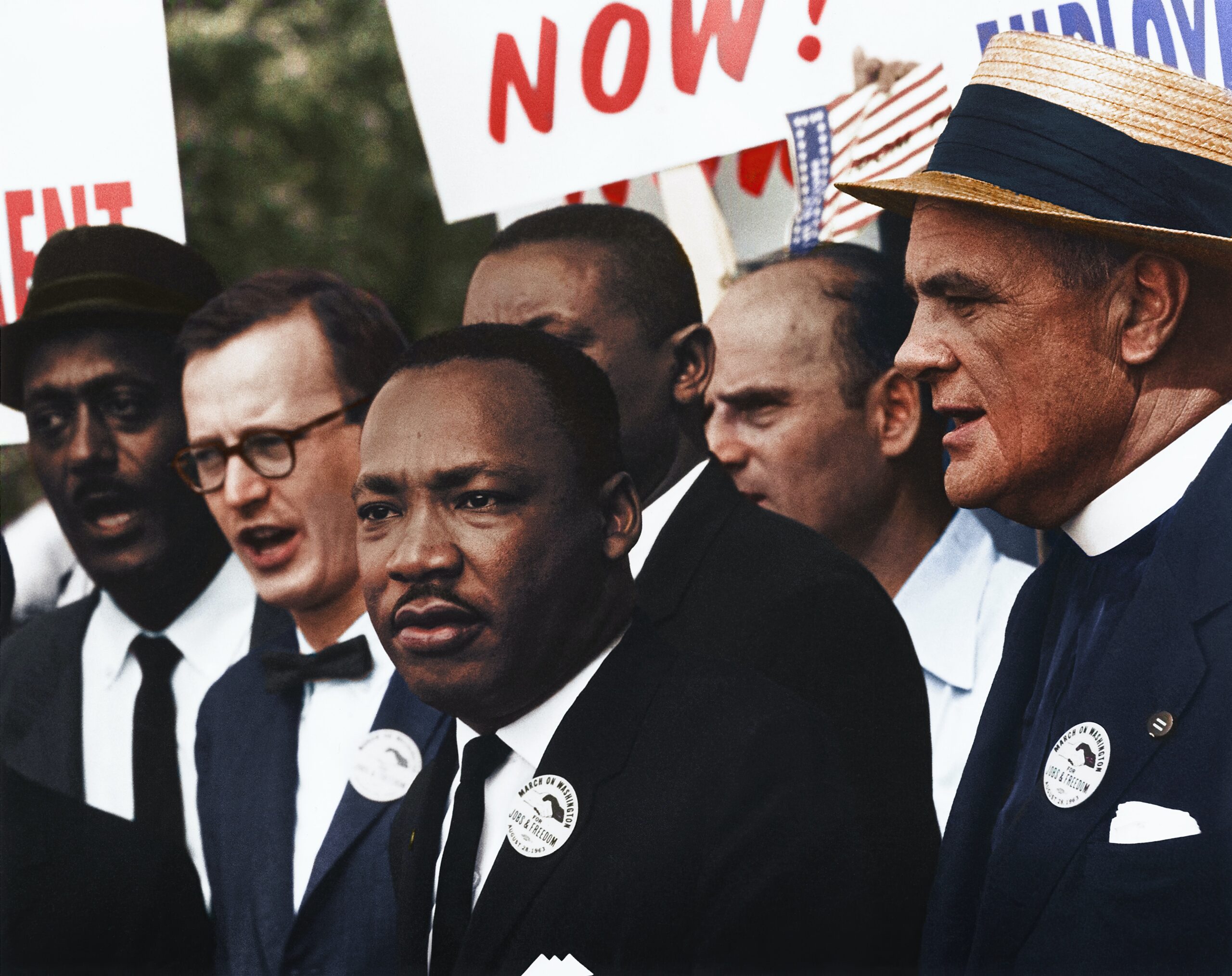
Martin Luther King said, “He who is devoid of the power to forgive is devoid of the power of love.” (Martin Luther King, Jr., Strength to Love, 44). Think about that next time you hear a leader preach unity.

I have voted for politicians who put values, including the values of love and unity, as their center piece.  They campaigned about governance in a bi-partisan way.  Then they took my money and immediately took their self-righteousness to a new level.  I’m not talking about politics per se, no I’m speaking of the seeming inability of any of those we elect to represent the people whose hopes for a better life were pinned on that person’s ability to change the tide.

They call for unity; but they manufacture harm from hate. Because they can’t forgive, the walls of hate and division grow higher. What will it take for forgiveness to rise above partisanship and allow healing to take root?

Perhaps nothing models the antithesis of forgiveness more in our day than the “cancel culture.”  Here, people and groups are erased because of conflicting ideologies.  What could take us further from the “unity” we seek than to attempt to erase others voices and harm those with opposing views?

I once was involved in a legal matter that took seven years to resolve.  My attorneys were confident of our position, and I spent half a million dollars based on their confidence.  In the end, only the attorneys made money.  I lost the battle.  I was very bitter for years as the entire ordeal nearly cost me my livelihood and I certainly allowed it to destroy my peace for way too long.  Thankfully, it didn’t tarnish my reputation or diminish my honor.  I would later have nightmares of the ordeal.  It didn’t happen overnight, but there came a time that I realized the only one that bitterness was hurting was myself.

Again, from Martin Luther King: “The words ‘I will forgive you, but I’ll never forget what you’ve done’ never explain the real nature of forgiveness.  Certainly one can never forget, if that means erasing it totally from his mind.  But when we forgive, we forget in the sense that the evil deed is no longer a mental block impeding a relationship.  Likewise, we can never say, ‘I will forgive you, but I won’t have anything further to do with you.’  Forgiveness means reconciliation, a coming together again.  Without this, no man can love his enemies.  The degree to which we are able to forgive determines the degree to which we are able to love our enemies.” (Ibid., 45)

When I finally forgave the party who sued me, I also let the issues wash over me and decided that perhaps I had some culpability in the matter.  I decided to give them props for thinking better than I did, for hiring better attorneys than I did, and eventually chalked it up to lessons learned the hard way.  I really did like the opposing party; I just didn’t like the pain they were causing to me and my business.  Still, they had a right to the path they took, and I had to respect that.  When I finally forgave, I even wrote letters to the opposition seeking their reconciliation and forgiveness for any harm I had caused.

What good does it do to carry ranker and hate? Those we hold this animosity toward are seemingly not affected by our pain—so why should we keep building the wall?  I will add parenthetically to what Dr. King said, that forgiveness is required of us because we depend on it.  Because I have been forgiven of significant things, I cannot self-righteously judge another and hold that grudge forever.  No one is without fault.  No one lives a perfect life.  Everyone needs second and third and fourth chances—regardless of your faith convictions or even none at all. It’s a part of human dignity.  Akin to being willing to forgive, is gratitude for being forgiven ourselves; for being the ones who receive chances to right wrongs and move beyond our past.  Gratitude is, quite simply, a contempt killer.

When I was visiting South Korea a couple of years ago for an international business and peace conference, the former Japanese Prime minister, Yukio Hatoyama, stood before the Korean people and an audience of leaders from around the world and expressed a sincere apology for the atrocities of his nation on the Korean people during the years of war.  He said, “We will say I’m sorry until there is no need to continue to say, ‘I’m sorry’.”  Think of this, an apology that stands as long as it is needed to heal the wounds of the past.

In closing, Martin Luther King continued:  “….we must not seek to defeat or humiliate the enemy but to win his friendship and understanding.  At times we are able to humiliate our worst enemy.  Inevitably, his weak moments come and we are able to thrust in his side the spear of defeat.  But this we must not do.  Every word and deed must contribute to an understanding with the enemy and release those vast reservoirs of goodwill that have been blocked by impenetrable walls of hate.” (Ibid., 46)

We can’t wait decades before apologies are extended and forgiveness is given and accepted.  Choosing to cancel someone instead of forgiving does not remedy, it only hurts – both sides. Instead, we can model the practice of forgiveness NOW and we need look only as far as Dr. King for this modeling.

If forgiveness spawns trust, then let’s all take the position that forgiveness is the only path forward, even though we might feel WE have been wronged.

Bring in Other Voices

February 2, 2021

Frank’s Library

With all the turmoil in our country and the world at large, it is sometimes difficult to find our voice and really understand where we fit in—to discover our place in the universe and how we make a contribution in it.  What we thought was, now isn’t.  What wasn’t, now is.  How do we discover what really is?

I heard someone say once that “reading books brings in other voices.”  I believe that reading books (more than news clips or social media) invites an entire feast, not just the portions others want to serve us.  Perhaps this is one way to understand our place in the world.

Finding what resonates with us and then respecting what resonates with others is what we gain by reading from many venues and authors.  We may not agree with everything we read—who would?  But filling our minds with many thinkers’ thoughts allows us to filter what does resonate with us and form an educated opinion.  It helps us create our views.  In many ways, it helps establish our purpose.

According to a study in 2018 by Pew Research, 27 percent of U.S. adults had not read even part of a book in the past year. The Bureau of Labor Statistics reported in 2017 that people in the U.S. 15 years and older spent an average of 16.8 minutes a day reading—down from 22.8 minutes in 2005.  Not surprising, women read more than men, and those between the ages of 20-34 read the least.

The main source of information in todays world is to “Google it.”  This is a great tool to do research or start on the path of discovery, however the answers found in such formats are often formed by opinions of others and yet are posted as the final word.  Is it?  No!  Additionally, many of us have found podcasts to be a great way to absorb information, but here again, we often turn on a podcast while we multi-task and probably absorb a small percentage of the content with little time or space to ponder the matter.  Audio books are the fastest trend in absorbing books with those under the age of 35, making up 48 percent of this market.  I also enjoy the fruits of podcasts and audio books but argue that reading books allows more space for pondering, discovery, and creating a deeper understanding of what really is.

Reading books provides insights, gifts, understanding, vocabulary, color, perspective, emotion, and so much more.  Because sometimes I don’t remember where I had read something that powerfully changed me, I mark up my books with tabs and highlights—sometimes writing my thoughts in the margins.  I will sometimes read a couple of pages, and having been caught up in the thought presented or how it made me feel, will sit and ponder for a good while, digesting how what I had read was affecting me. 

Books cause me to question, and occasionally seem to shake the foundation of my beliefs, then finally settle to create a more solid foundation because my mind filtered the sediment.  I often read expert writers’ prose and sit in awe of how they painted the mosaic in a way that I had always felt but didn’t have the words to express. They can make an image so vivid; I just smile at the artistic nature of words well chosen.

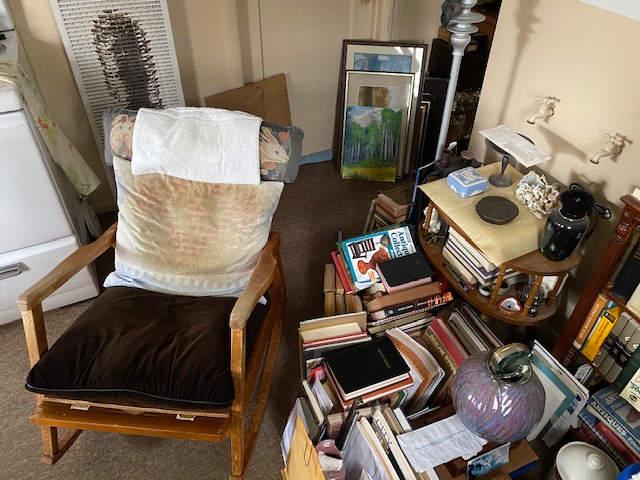
I have written before about the topic of being a “Seeker.”  You cannot be a seeker without reading books.  I used an example of my friend (let’s call him Frank) who lives alone in his small, sixty plus year old one-bedroom home; the simplest existence you will see in our modern culture.  No TV, no internet, only an old phone attached to the wall gives him access to the outside world.  He is in his sixties and has always lived alone.  He has a chair next to his kitchen and “library” —no dining table or living room.  He is very well-read and a great communicator.  I was impressed to go visit him again recently. I thought I would leave a box of beef we had processed on his step with a note. 

My friend had tears in his eyes as he came out of his house to greet me.  He hadn’t had a visitor for months.  His business of repairing older cars is nearly dead from COVID.  With Frank’s OCD and cleanliness (he’s a germaphobe), I wasn’t worried about COVID protocols, though I did wear a mask and we kept social distance.  He had not been in public for several weeks and has kept himself ultra-safe.  He showed me his last receipt from the grocery store to prove his point—dated eight weeks ago.  He made it very clear he didn’t want me to leave. 

He wept as he informed me his girlfriend of 15 years had left town to move to a city far way to be with her twin sister.  She had lost her job due to COVID and found a job in her sister’s city and now lives with her.  He was heartbroken and devastated.  He doesn’t know how to cope.  He invited me into his little home and found the only other chair in his house.  He never invites anyone into his little home because it is so small and for some reason is apologetic for it—but it was 10 degrees outside so his desire for me to stay prevailed.  We sat six feet apart and visited.  I mostly listened.  He was thinking thoughts of suicide, but decided he still had a lot to live for.  We talked for two hours about this topic.  He had not known I had lost a son to suicide last year.  Frank knew my son and together we shed a few tears in each other’s grief.  My friend is very lonely. 

We have shared books with each other over the last couple of years.  He pulls books from his stash that he thinks I would enjoy and I do the same from mine.  Books are the glue that keep our relationship alive.  Our conversation shifted from grief to hope as we talked about what we had been reading recently and how those books were shaping our lives and what we had discovered.

The picture at the top of this article is Frank’s library—on the edge of his kitchen.  There he sits in his one chair and acquaints himself with his many friends and voices from all over the world.  These friends are keeping him alive, especially now since he lost his girlfriend.  These other voices are giving him hope as he struggles through the losses of this COVID world.

I left with a couple of books from his treasury, and I will return with another.  Not only are books shaping our lives, but they are also connecting us in a way much deeper than social media could (which neither of us imbibe in). 

I am thinking about our chaotic world, where voices from the news and social media are shouted from our electronic devices, where voices are being cancelled, and where civil unrest is ruling the day; what if we take a step back?  What if we sit a spell with a good book?  What if we share our finds with others to expand our understanding?  What if we bring in other voices to heal our suffering?

Charles W. Eliot said, “Books are the quietest and most constant of friends; they are the most accessible and wisest of counselors, and the most patient of teachers.”

Frank’s hopes lie within the pages of the books he is reading.  Is he so different from any of us?  I  tend to think not.

Give Life a Chance – Part two of a personal reflection on suicidal ideation

December 15, 2020

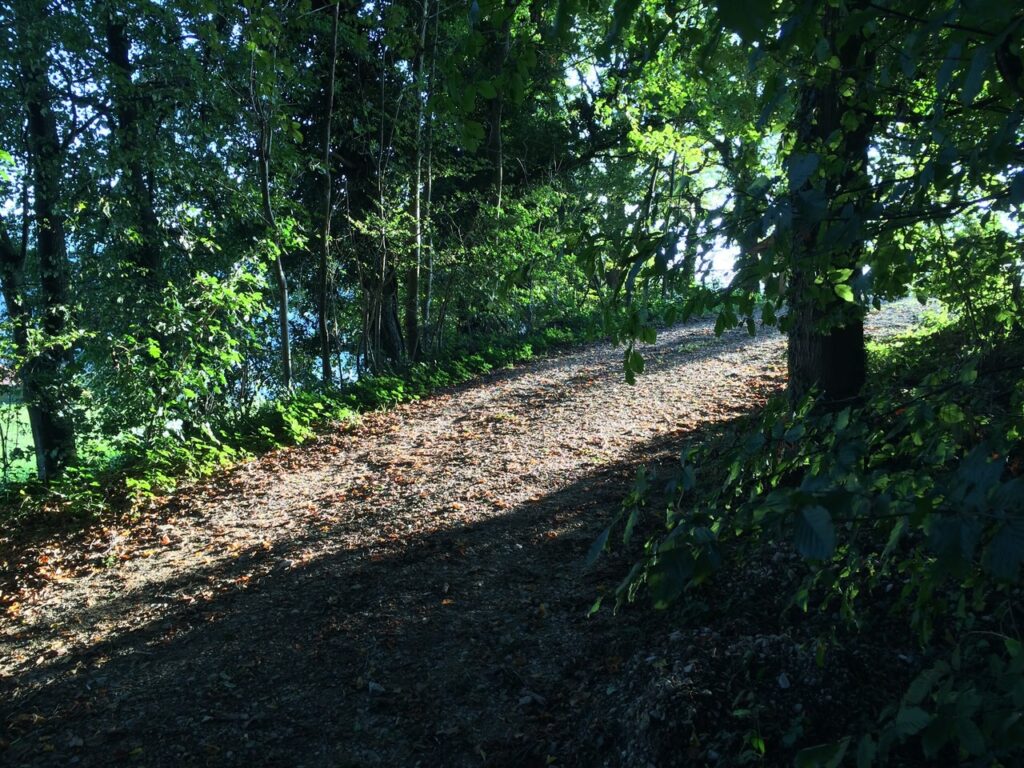
The path Skyler walked in Switzerland

In a previous article I reported that despite all of my research and writing about anxiety, depression, and related issues that affect so many, it wasn’t enough to save my 39-year-old son from succumbing to these demons and taking his own life.  Skyler died in August, but he continues to live within us.

I have now stopped trying to figure out so much “Why” he decided to take the fatal step. Rather, I have continued my research and have been reading his journal entries that tell a deeper story.

Recently the Centers for Disease Control and Prevention reported 40 percent of U.S. adults 18 and older reported struggling with mental health or substance abuse—three times that affected one year earlier.  Both anxiety and depression symptoms have increased dramatically. 

Across the globe this has brought with it both short- and long-term mental health implications.  This vulnerability is especially visible in those quarantined and underprivileged. Indeed, COVID 19 targets anyone in its path.

Let me give two ideas from both science and Skyler’s journals that will assist in diminishing suicide ideation.

Idea One:  Equality and the Mindset of Money

In studies by Johann Hari (Lost Connections) and Kate Pickett and Richard Wilkinson (The Spirit Level), they found that the more unequal the society, the more prevalent were all forms of mental illness.  They cited examples in the United States, where society has huge gaps in income and status, and compared that to Norway, where highly equal society results in much less mental illness, including depression and anxiety.  So much has the gap of equality widened, that it used to be that your boss would earn twenty times more than the average worker. Today, it’s three hundred times more. My purpose isn’t to unpack social justice, but to make a point that equality and status have an impact on mental illness.

In a revealing parallel, the millennial and younger generations have pushed back against the idea that wealth equals success.  It is these generations that are currently suffering the most from mental health challenges. So it follows that if an unequal society brings with it issues of diminished self-worth, anxiety, and depression, then a better mind-set should be developed to deal with this.

My millennial-aged son Skyler and his wife took a wonderful two-month trip to Europe in 2012.  They lived out of backpacks, enjoying what life brought their way as they traveled several countries.  Skyler had an epiphany during this time that is noteworthy for all of us. He said:

“I’ve depleted most of my checking account to see and experience these places with my wife.  Throughout my travels I’ve been able to learn much. We’ve traveled as cheaply as we could, but it’s still quite expensive.  The funny thing is, my relationship with money has changed in a way I never anticipated it would.  I’ve finally become detached from my money.  The feeling to horde my money is now gone.  I’ve learned that money is a tool and that is all.  It is used to buy food for sustenance, to help others when you are able to, to use to gain experiences that cannot be had without it.  I’ve never had a hard time paying for needs and occasional wants.  However, using money for new and enlightening experiences did not come to me naturally.  It was very difficult for me to pull the trigger….the turning point came in the middle of the reservation office at the Basel SBB train station.  Turning over my credit card for two months of train passes I broke into a cold sweat.  I gave the attendant my card and began to rock back and forth like a total certifiable crazy person.  A panic attack on a level I had never experienced.  Gone!  Thousands of dollars gone with the swipe of a mean travel agent’s chubby hand.”

He went on to say, “Clearly, my relationship with money was not healthy.  I can say my mindset is still about frugality and it will always be so.  A fool and his money are soon parted. To not be wise with my money would be sad and wouldn’t be right.  However, no amount of money can replace experiences.”

My son’s comments on money were also captured in my book Launching Leaders – An Empowering Journey for a New Generation.  In the chapter on financial fitness, he said this of millennials and money: “Most of us don’t view ourselves as entitled, but rather as people for whom being treated like an equal is of the utmost importance.  It’s telling that, in a technologically advanced world, millennials would rather trade their time and money to have meaningful experiences—-than for big homes and fancy cars.”

Why is this important?  The idea of equality and the true meaning of money go hand in hand.  When self-worth is not based on status or money, then it’s harder to go to the dark places of self-pity and a feeling of worthlessness, bringing on the dark clouds of depression and anxiety.  Much can be unpacked in Skyler’s statements; but rather than me doing the unpacking, it’s up to the reader to ponder and pull the nuggets out that really are life changing.

Idea Two: Take a Hike

Isabel Behncke, a renowned evolutionary biologist operating out of Oxford University, spent her life studying the “nature of human nature.”  She spent much of her life roaming the earth in nature, observing and learning from our evolutionary ancestors and cousins. When compiling her research at Oxford, shut inside all day, she found herself depressed for the first time in her life.  She couldn’t sleep or focus.  She began to think of the caged bonobos she observed who were depressed in their unnatural surroundings and wondered if her own experience being shut in was equivalent. 

Her experiences led other scientists from the University of Essex to study the effects of mental health while being cut off from the natural world (see The Spirit Level).  They tracked the mental health of over five thousand households for three years.  They studied those who moved into more rural green areas, and those who moved from the rural green areas to the city.  Their studies revealed what you might expect, that those who moved into rural green areas from the city, saw a big reduction in depression.  Those who moved away from green areas saw an increase in depression.  In their studies, they had those who moved into the city from green rural areas take a nature walk every day and then tested their mood and concentration.  Predictably, they were all able to concentrate more.  However, those who experience depression and were committed to this nature walk regiment, improved five times more than those who didn’t.

Similarly, Isabel’s studies revealed that exercise significantly reduces depression and anxiety.  People who run indoors on treadmills experience a reduction in depression, but not as much as those who run in nature.

If you are like me, these studies were somewhat unsurprising, but the depth of the studies impressed me and were even more convincing than my own undocumented opinion.  Now enter the world of COVID, where more people are shut in, either by choice or mandate, there is a connection with depression and anxiety we can’t ignore.

After our son’s death, my family and I have had to deal with different ways of healing.  One of the first “doctor’s orders” for one of my daughters was to take a nature walk every day.  I take a 30 minute outdoor “prayer walk” each day.  These simple acts invigorate the mind and soul.  They are great remedies to help our healing and reduce anxiety and depression.

When Skyler was in Europe, his home base was a family in Switzerland.  There he observed a couple in their 70’s, whose vibrant life at their age impressed him.  He discovered and adopted certain routines and guidelines.  He would take a walk in the countryside each day and listen to the cow bells. He noticed the elderly couple paid little attention to TV, but devoted their time to hikes, gardening, reading, playing games and visiting. Perhaps our world of NOW has diminished many of these routines that are simply good for the soul.

On a Launching Leaders trip to Manchester, England, we held an interfaith event at Manchester University’s Catholic Chaplaincy.  One evening as we gathered around an outdoor fire and pizza oven, we witnessed amazing stories and bantering by our Catholic priest friends, Father Tim and Father William.  Father William’s sister was there, complaining about how Father William always lived in the past.  To which he gave the most timeless reply in his Scottish brogue “I do not live in the past, the past lives in me.”  So it is with our sweet son.  He continues to live in us, and I hope the lessons he is teaching us even today will help shape our lives for the better.

I’ll continue this series with more lessons Skyler has taught us, drilling down into how reading, time management, and observations of others build strong defenses to battle mental health issues and assuage thoughts of suicide ideation.

The Blessings of True Friendship

December 7, 2020

“Today we are faced with the pre-eminent fact that, if civilization is to survive, we must cultivate the science of human relationships.”

–Franklin D. Roosevelt, April 11, 1945–

I learned the true value of friendship from our son Skyler who had many friends over the years—I don’t know of anyone who knew Skyler who didn’t love him.  As you have read in this blog and other publications, Skyler succumbed to the demons of the day in August and died by suicide after giving it his all.  Two of his childhood friends showed up without solicitation to join the family in helping us address Skyler’s affairs (cleaning out his home and getting it ready to sell, shipping off his belongings to loved ones, selling things to assist his wife in this arduous transition).  These two friends loved Skyler unconditionally. Ian “Baggs” Bagley and Kyle House were these friends.  When they heard of Skyler’s passing, they made their way from Utah (Kyle) and South Carolina (Baggs) and showed up at the house to assist.  They left their jobs and family to be there. I said to Ginger early in this process, “Who does this?  Who leaves their own world and family behind to come to the aid of a dead friend’s family?”  Ginger replied, “Angels do.”  I shall ever be grateful for the example they set in what a true friend is.  They said, “Skyler would do the same for us.”

There is a movie clip from Tombstone that Skyler shared with Kyle:

One of the boys says to the ailing Doc Halliday; “Doc, you oughta be in bed, what the hell you doing this for anyway?”  “Wyat Erp is my friend” he says.  To which the wrangler replies, “Hell, I got lots of friends”, to which Doc replies, “I don’t”.  https://youtu.be/C5EfzJlKqKY

True friends are few and far between.  For Baggs and Kyle, Skyler was their friend; for Skyler, they were his.

When Baggs drove home after dropping Kyle off at the airport—after a week of serving, the grief hit him hard.  The finality of leaving Skyler’s house after packing it up was difficult.  He always talked to Skyler while driving; now who will he call??  What now?  Baggs said “Skyler set the high bar of being a true friend—that is a legacy we can try to emulate.”  That is exactly right—-we honor Bear (Skyler’s nick name) by the way we befriend our friends and serve others.

In that spirit, I have thought deeply about the value of true friends, and vowed after witnessing what true friends do, to emulate what I have learned.

There are three types of friends: True friends, assigned friends, and fake friends.  I’ve had all three.  Let me comment on each type briefly.

True friends: they respond spontaneously and reach out just “because.”  They are willing to serve, be present, and go the extra mile without being asked.  They actually desire to serve because they love.  There is no hidden agenda.  The relationship goes far beyond the surface and is founded on solid bedrock—immovable.

Assigned friends: are touching base to fulfill an assignment or check off the box (think of a fellowshipping assignment in your church or organization).  Not all bad, and sometimes these assignments result in lasting true friendships, but often they end when assignments cease.  Think of businesses where clients and customer service are “matched up.” They are friends as long as the relationship benefits the other financially.  Usually nothing more lasting.

Fake friends: are those who go through the motions because there is something in it for them.  Their cousin is “assigned friends”, but the depth of artificial is as fake as the mannequin in the store front.  It can appear real, but it’s not.  You know the type; they chum up to you in public places to be seen and could care less about you—-they are just using you to get to their destination.  Today’s technology offers up legions of fake friends where adding a friend to your life is as easy as a click; and just as easily one can de-friend or cancel a relationship with a click as well.  Very sad really. There are lots of fake friends out there—I pray I’m NEVER one of them.

In the spirit of being a true friend, wonderful opportunities present themselves that in my opinion are not coincidental.  True friendship gives opportunities to serve and be served.  Let me share one recent example. 

My friend and co-founder of Launching Leaders Worldwide, Terry Pitts, invited me to accompany him to fulfill something on his bucket list—to become an ocean certified sailor.  We both had sailed for years in our earlier lives, but never on the ocean.  We both had hung up the spurs on this endeavor long ago, but Terry, now in his 70’s, decided to not let life pass him by.  As I mentioned, I don’t have that many friends, so I said “sure, game on.” 

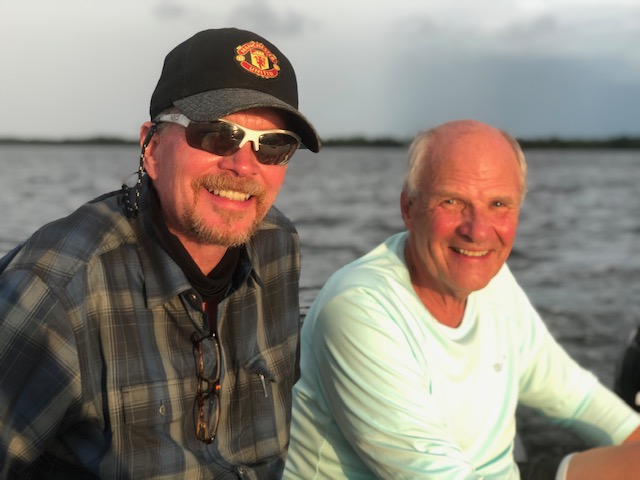
Steve & Terry

For months prior, we each enrolled in an on-line school prior to our arrival to Fort Myers, Florida.  There, we were introduced to a new friend, and sailing partner from Ohio, Nick Fry, whose life was also that of being an entrepreneur, and who decided also that life was about the experiences not just the destination.

I had not realized that after my son’s passing, I had insulated myself in a cocoon of despair which paralyzed me in ways I wouldn’t have imagined.  Now, on a 40 foot catamaran, we three were sailing a half million dollar vessel we didn’t own, and had exactly one week of training to chart and navigate a destination, anchor in the ocean overnight, and return safely to the harbor home of the boat we were sailing.  On this journey we applied our recently acquired skills, trusted each other at our various posts, and had an experience of a lifetime.

With my son’s passing, I could have easily phoned up Terry and said I wasn’t going to make it after all.  But after witnessing how true friends behave, there is NO WAY I would let down my friend. And I also believe that since Terry is a true friend, he was doing this as much for me than for him. I told my wife a few times between our sons passing and the weeks that followed before the scheduled sailing school that I just didn’t feel up to going.  She reminded me of the angel friends who attended to our son.  It was my choice—-would I roll in my grief or arise and decide to live life the way my son did?

I chose to live, to honor a friend’s request.  Day by day on the sailing ship, my cocoon unraveled, and my grief melted by the kindness of my old friend and my new friend.  This was just what I needed to move forward and to thrive.  I needed to experience true friendship.

Charting our course
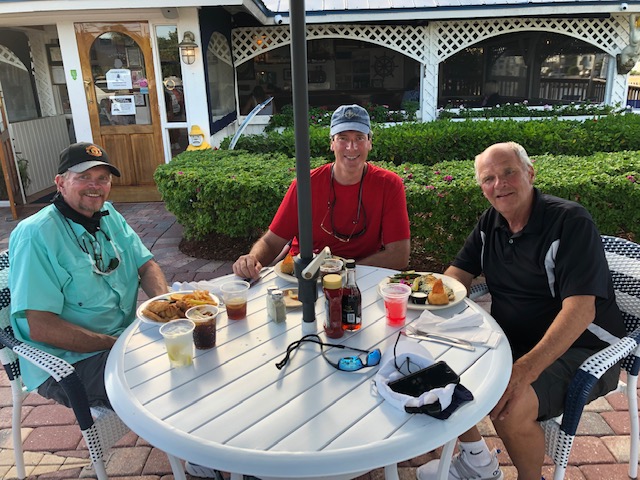
Enjoying the fare

The sailing course was very difficult, and I had a hard time focusing.  Simple things became hard and big things became impossible.  I would take three times longer to take a test than my mates; but when it came to crunch time, they were NOT going to let me fail.  They mentored and tutored me across the finish line.  “We are not leaving this place unless we are ALL captains” they said.  I was humbled and grateful.

A transformational experience

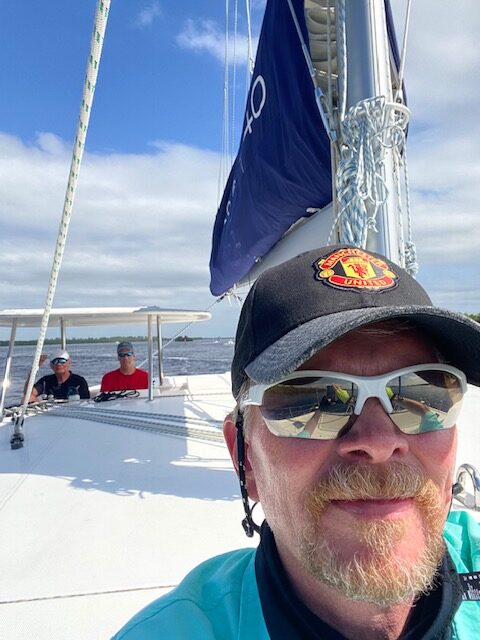
You can tell from the contentment in my face, that this experience was transformational to me.  Not just because we all became “captains” and certified ocean sailors, but because we experienced something that occurs when those friends you are with are not there for a photo op or because they are assigned, or that they are faking a relationship to get ahead.  No, the peace and contentment that came over me was because we were experiencing what true friends do—a caring relationship without an agenda.  It was fun too!

On this sailing trip, each morning at sunrise I would leave my quarters and sit on the bridge and meditate.  I wrote down lessons I learned from the sailing trip, which actually apply to true friendship:

  • It’s the journey, not the destination
  • Teamwork requires charity
  • No one succeeds alone—ever
  • Communication is key—be teachable and listen more than you speak
  • Act decisively—if you delay you could end up in “irons” or “heaving to the wind”
  • Practice—over and over again.  Create the instinctive patterns to succeed
  • Friends and relationships are the most important part of the journey.  They equal the joy of the journey.  Cherish them.
  • Everyday is thankfully different, requiring a different tack.  If you are not changing course—you miss out on opportunities
  • Stuff happens—put the wind back in your sails and move forward—learn from the experiences

I am thankful for true friends and vow to be one myself.  We can all learn to be true friends—we can add to the richness of our lives.  I have received unsolicited texts and messages from true friends regarding our loss; and also, many who have reached out to check in on us—not because there were assigned, but because they love us.  A few have paid us a visit unannounced.  Thank you all.  It’s time to loosen up and get off of our merry-go-rounds of doing the required stuff each day and seek experiences that allow life to be lived to the fullest.  That is something that has taken me too long to learn.  My wife is grateful I am learning it now.

Give Life a Chance – A Personal Reflection on Suicidal Ideation

October 11, 2020

Skyler Hitz

For several years I have been doing research and writing about anxiety and depression and related issues that affect a large percentage of our populous.  These issues have had an especially profound impact on the rising generations.  Our teens and 20 to 30-somethings, who are trying to redefine real purpose, wholeness, and well-being in their lives, are in a battle with prolonged isolation, feelings of hopelessness, financial loss, and stress.    

I am sorry to report that in all my research and writing about this topic, it wasn’t enough to save my 39-year-old son from succumbing to these demons recently.  His was a combination of mis-diagnosed prescription drug use, ADHD, and anxiety and depression with a COVID capper that caused his mind-set to finally throw in the towel.  He left behind a loving wife, parents, four siblings and their spouses, nephews, nieces and many friends.  He was truly loved and will be loved forever.

Now, amid the epidemic of the maladies that have raised the suicide rate to an all time high, I have discovered  some solutions that may help those in the midst of this darkest loneliness to give life a chance.  I speak as a father and close observer, not as an expert.  I share things not normally published as the “list” of warning signs. Resources are plentiful today from professionals, which I heartily recommend.  My observations are personal.

My source is largely from my son’s journal entries and our experiences with him, especially over the past ten years. While my son’s discoveries didn’t in the end provide the hope he needed to keep living, they are still relevant to each of us who HOPE for a brighter day; particularly those who have or are considering throwing in the towel.

The COVID-19 pandemic contributed greatly to my son’s outcome, but the path to this end started way before this.  The Centers for Disease Control and Prevention reports 41 percent of U.S. adults reported at least one symptom of a mental health condition since the pandemic, growing to 52 percent of those aged 25-44, and 75 percent of those aged 18-24.

In another study by the CDC during late June, 40 percent of U.S. adults reported struggling with mental health or substance abuse including suicidal ideation. It is not uncommon for issues with mental health and substance abuse to go hand-in-hand.

With hopes that my experience can be of help during this Suicide Prevention Month, and though the sting of my son’s recent passing is still hurting, let me suggest three things to consider.

Proper Diagnosis and Treatment

My son lived with mental health challenges since he was first diagnosed with ADHD as a young boy.  It’s important to understand that over the last twenty years, much more has been learned about prescribed drugs for such challenges.  Mental health is a serious concern. Targeted medical care is essential.  Let me explain.

I have been a diabetic for most of my life.  When I was diagnosed at age 30, it was by a blood test I had for a physical exam.  The general practitioner treated me with prescriptions for years; and every year or so, I would have another A1C test to see where we were.  It wasn’t until my A1C exceeded 12 (extremely high), that my family doctor referred me to a specialist.  Since that time, working with a doctor who specializes in endocrinology, have I been treated with the proper drugs, education, and diet that have brought my A1C down in the low 6’s.  I don’t blame my general family doctor for my living with high blood sugar for many years; he did his best with what he knew.  The point is, he didn’t know enough to treat my illness with exactness, and I didn’t know there was a better way.

The importance of having specialty doctors oversee and monitor mental illness is paramount. My son’s medications were such that if not used properly and under good supervision by medical professionals who are specialists, the side effects would increase dramatically.

In our world of conflict between proper medical care and affordability, MANY are so stressed about the financial implications of proper medical care that they don’t move toward better diagnosis and treatment because they can’t afford it.  Everyone in this situation needs to know that there are help lines and programs available to offset the expenses of this dilemma. Regardless of medical insurance availability, a loved one needs to be the Sherpa in guiding this process. The person suffering from mental illness often cannot see the trees from the forest and needs a Sherpa.  They may resist, but they need to be hooked into a lifeline as soon as possible.

Lovingly Step Over Their Protective Wall

There are always questions after one chooses to die by suicide, of what might have been done by others to prevent it.  Truth is, ideas of prevention MUST come before, rather than following that act.  For many who choose suicide, it is a planned event; a decision they made well before the point of no return. In this planning, it is very typical for the individual to both reach out and also isolate.

In our son’s case, he was very social by nature and really fun to engage with.  In the past few months, he self-isolated and communicated less with his family and many friends.  Isolation from peers leads to lower estimations of self-worth and self-confidence, which can also play a role in the path toward suicide.  It can generally be recognized when self-isolation and lower levels of communication are occurring, and we should all have our senses on alert for these signs.  When this happens, even though our intervention might not change the outcome, it is always worth the effort to step over their walls of isolation and invite ourselves in.  While “love” is not enough, the simple fact that one cares enough to not allow a loved one to shut themself out is powerful medicine.

The idea of one reaching out at the same time of isolation seems paradoxical.  Watch for the reaching out to be in the form of dropping clues of what’s coming.  In our experience with our son, communications were less frequent, but held important clues.  He sent short clips of movies he loved and shared with friends, which were revealing of his pain and were forecasting possible things to come. 

One text to a friend, referenced The Never-ending Story, a movie from 1984.  The character, Rockbiter, was lamenting to Atreyu, the boy whose mission it was to defeat the “nothing,” who said while looking at his big strong hands:

“They look like big good strong hands don’t they.  I always thought that’s what they were.  Aagh, my little friends.  The little man with his racing snail.  The nighthob, even the stupid bat.  I couldn’t hold on to them.  The “nothing” moved them right out of my hands.  I failed.  ….. Listen, the nothing will be here any minute.  I will just sit here and let it take me away too.  They look like good strong hands don’t they.”

My son was saying through this text and sharing of this clip that he was trying so hard to hang on.  Watch for these signs as they are often communicated in an incognito way to disguise their true pain. They don’t want to “disappoint” anyone, and at this point are feeling like their life is a burden to those they love.

Faith Has a Place

In my son’s case, he found himself disconnected from traditional faith the last few years of his life, but not divorced from morality and in living a life of goodness.  Faith is a sensitive topic, and though we were open about the different paths we had chosen, we didn’t judge each other for our choices in this regard.  I believe faith of any sort is healthy in pushing away the demons of the day.  Faith and belief in something greater than yourself is worth pursuing.  It wasn’t a lack of faith in a higher power that caused my son to take his own life. But it didn’t help that the opportunities of discussions regarding faith and other forms of spiritual discernment were diminished—by his choice; causing his self-worth and confidence in a brighter future to diminish with it.  It’s worth talking about. 

In the end, I heard from many of my friends of faith from many different faith cultures sending loving threads, that, when quilted together made a wonderful blanket of faith I have wrapped myself in.  I have a belief that my son has now found a space for faith. I want to encourage anyone in the midst of their darkest moments to consider faith as a powerful tool in resetting the path toward hope; and to not exclude these healthy conversations as a part of their whole self.

In future articles I will share from my son’s journal entries.  We will discuss such things as love, money, and purpose as relates to mental health and suicide ideology.  I believe these thoughts will establish some insights that are very helpful, if implemented, to create a lifestyle that assists in both holistic living, mental healing, and in overcoming suicidal ideation. 

I’ll close with a quote from my son, who wrote a journal of “Lessons Learned” while traveling in Europe with his wife for three months with nothing but a backpack. 

“Continually believing that you can reach your dreams in whatever you do is just as important as doing what you do.  This doesn’t discount hard work…..But, belief in yourself, your abilities and your power to bring about great things is essential to actually doing those things in your life.  I used to look at certain ideas, things, movies, etc. and marvel that such a thing could happen.  Then, I would wonder if I could ever do something so great.  There’s nothing wrong with being blown away by something, but I’ve now come to know that there is something wrong with thinking that maybe I could not do such a thing.  It is always within my DNA to be able to create great things.”

My hope is that in sharing our experiences, MANY will come to know that all things are possible to those that believe—-especially the possibility of giving LIFE a chance.

COVID Road Trip

August 6, 2020

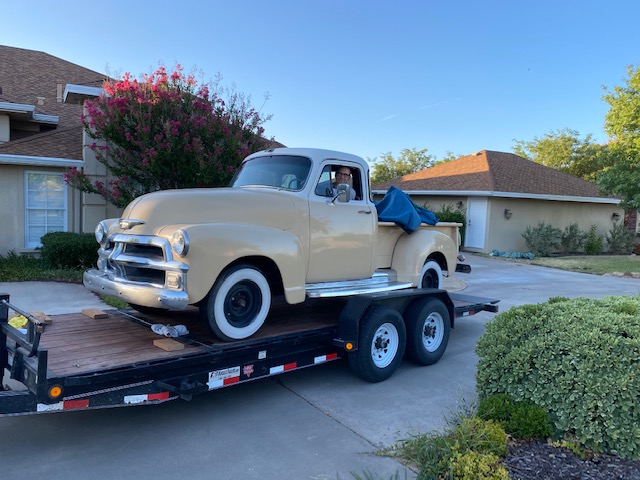
I’ve always loved a road trip. In the age of COVID, they are becoming the best way to escape for a little while; gas is cheap and personal time is more abundant—or at least less “directed” for most of us. With that in mind, I volunteered to help a good friend (who is moving to San Angelo, Texas), move his 1954 Chevy truck to his new home. It wasn’t a huge deal, I had the time and a truck/trailer, and we rode together for company.

My doctor friend is authoring a new book, and we had much to talk about surrounding his fascinating and highly spiritual quest. He is a deep thinker and qualifies in my mind as a seeker. We shared things that matter most regarding life’s purpose and the hope we each have in faith and the divine. These were conversations never to be forgotten.

We had discussions on faith, politics, COVID, family, and dreams. At the same time, we mixed in some e-books, music, and articles from the Wall Street Journal. 24 hours of drive time in two days—and all of it empowering. There was of course time for laughter and good story telling.

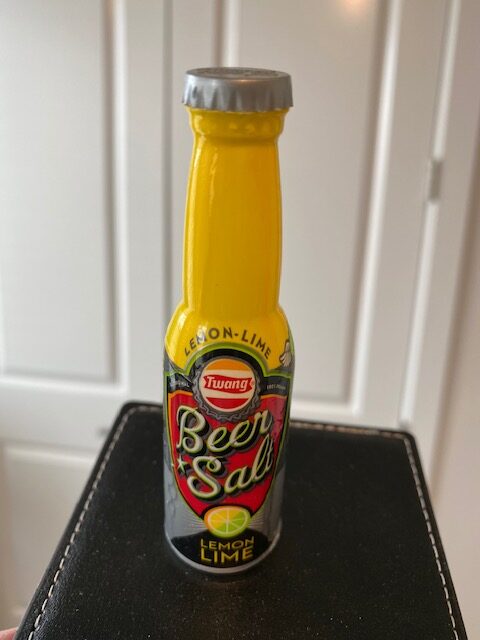
Naturally, we needed to stop every few hours for a break and grab some fuel and treats. One of the delights of a road trip for me is the chance to roam the isles of the mini marts in search of whatever beckons my call. Even as a diabetic, most rules of nutrition are out on a road trip. On a road trip last year to Texas, I discovered a product called “Beer Salt.” I found it in convenience stores in gas stations. I don’t drink alcohol, and the product doesn’t have alcohol in it, but it is fantastic on apples! (most folks use it on the lips of their alcoholic drinks). On this trip, I refreshed my supply—such are the treasures found on road trips.

Four ideas to enhance your COVID road trip:

Own the road, NOT the conversation

I was fortunate to be traveling with a great listener. Perhaps that is why he is so brilliant. I’m reminded of a shorter road trip a year earlier with another friend, where I spoke perhaps 10 sentences in our “conversation” as he took all of my oxygen listening to his own voice for the better part of four hours. I love the man and appreciated immensely the experience, but also felt that he didn’t care so much about my perspectives as he took 99% of the free space. GREAT road trips embrace conversations, which by definition is an experience where all who are present have a chance to express themselves openly. You don’t have to measure whose time it is to speak, but you ought to listen with intent and allow a free flow of thoughts without dominance.

Give yourself permission to explore the space (a little more cow bell)

Apparently, some 62% of Americans say the political climate prevents them from being open or saying things they believe because others might find them offensive (CATO National Survey). Our road trip eliminated all barriers (what would one do, jump out of the truck?). Even though our views are similar, it was refreshing to share openly and LISTEN for the other’s opinion. We had some verbal protests, but NO rioting. I love the vintage Saturday Night Live video about producer “Bruce Dickinson” asking the rehearsing band to give him more cowbell. Being open enough to share 100% of how we feel about a topic is the pure fruit of a good road trip. In many ways, this hilarious video from the 70’s gives us a reminder of how give and take in opinions really matter.

Go ahead and solve the world’s problems

Look, we all hope for a COVID cure, healing for social unrest, true equality for all living souls, and a return to even more meaningful relationships than ever before. We might as well start now. Solving the world’s problems may not be possible on a road trip, but it sure as heck doesn’t hurt to get started one friend at a time.

Find your own version of “Beer Salt”

In a day when we traveled the world more freely, we came back with memories of places that spoke to us—places, food, people. These are the pearls of travel; experiences that make up the body of our soul. A road trip can be just as fulfilling as an overseas vacation—you just have to be intentional. That’s a word I love.

Part of this challenge of finding your own “beer salt” requires that we watch and learn, appreciate the oddities of the world around us, and embrace ambiguity. There are so many unknowns and unsettled things around us, that if we appreciate the hidden gems, and unearth them, we find jewels— be it wisdom, discoveries, new truths, solutions, dilemmas, or revelations.

I hope you each have a friend or two as good as I have had to do “road trips” with. I have learned a ton, found treasures—even hidden treasures, and sewn together stronger friendships in the process.

Be intentional and make your road trips a delight and pleasure; even (and especially) in the age of COVID.

In an age of cancel culture, our task is to create a ‘context culture’

July 3, 2020

This article was originally published in Deseret News on June 28, 2020.

In a world that has been anxious over COVID-19, the economy, and now cries for equality and social justice, where can we find hope for a more a more positive culture of diversity, equality, and health? What can we do to alleviate the suffering, judgment, and unrest that is currently plaguing our world?

We are living in what has emerged as the “Cancel Culture.” I actually have friends who have lost friends simply because of a differing point of view. You may have experienced similar. Have we really come to this? Wouldn’t it be better to have a “Context Culture” where we follow some basic rules of decorum and keep our friends?

In hopes for a Context Culture I have assembled five points that may be helpful.  I don’t have all the answers, so my hope is that you will take the good in this and move the ball forward. Some of my points are already being been discussed in the public square (virtually of course), but I wish to add to the conversation to bring about more healing to our souls and the country.

Move forward, but don’t forget the past.  I have been enjoying some history books about World War II and the “Greatest Generation” of which my parents were a part of.  I have had to put the books down from time to time and wipe away tears as I contemplate the tremendous price paid for my freedom.  I don’t think I appreciated it enough and hope ALL generations can appreciate the eras of their parents and grandparents.  Yes, we can and should improve upon the past, but NOT without considering the lessons that history has already taught us.  Many of the soldiers who returned from WWII did so with some prejudices of the enemy.  They were harbored for many years.  When you read about the experiences for example of Iwo Jima, you can understand their mindset.  Even so, our nation stepped into the vaporized midst after the war ended and those veterans were a big part of the re-building effort.  Healing takes time. 

I remember being in Korea in early 2018 at a time when there was hope for harmony between North and South Korea.  The hope was palpable.  On the way to Korea I read of the atrocities perpetrated upon the people of Korea by the Japanese armies during their annexation of South Korea during WWII.  Unspeakable things—-and as it turns out, Japan had never offered an apology since the Korea war, and there are still great walls of mistrust between the countries.  On this occasion, at the peace conference we were attending, the former Prime Minister of Japan, Yukio Hatayama, stood before this great gathering and said to the people of South Korea “We will say ‘I’m sorry’ until there is no need to continue to say ‘I’m sorry’.”  It took many, many years for this expression of sorrow and hope for forgiveness to be uttered. 

Perhaps some will never have a heart to forgive—but until dialogue is had where raw expressions can be uttered, how will we be able to move forward?  The past, and lessons learned from them, are key to moving forward to bridge the gaps of understanding.  Rather than tear down statues that represent a past we don’t agree with or appreciate, what if we left them up as a memorial marking history of what was, and now what will be.  Let us take the time to know of the past, appreciate the lessons learned (both positive and negative) and allow the voices of generations past to have a voice at our table of hope.

ALLOW diversity of thought.  There is way too much barking and not enough talking.  If someone has a differing point of view, there seems to be a chaotic contempt toward the other’s view—regardless of what it is.  Everything is expressed in tweets or other types of sound bites.  Guess what, you cannot have a dialogue in 280 characters.  If the view you express is different than the barking voice, then it is lost in the noise of the bull horn.  Sometimes when I witness such contempt, I want to get between the voices, set a table of ice cream between them and just ask if we can talk without screaming, and listen without judging.  The techniques (if you can call them that) of screaming and causing riotous havoc are simply NOT the formula that moves us forward.  The screaming voice may move the sentiment of the moment, but not in a permanent direction that anyone will appreciate years from now. 

Perhaps some have felt discounted for so long that their voice is accompanied by loudness and antics that are sure to get attention—but to what end?  Even so, we can all decide to lower the temperature and appreciate a calm discussion.  Put down a table with some chairs and get out the ice cream.  NO ONE will always get 100 percent of what they desire; some are even lactose intolerant.  But they make ice cream for those maladies these days, so there is no reason not to sit down and partake. What if we all get some of what we desire and agree to move forward in the new age with a hope of an even better future?

Listen with intent to know the heart of those we engage with.  I opine that I fancy myself as a boomer with a millennial heart.  As such, I have been a defender of the great millennial and Gen Z’s approach to life.  Labeling isn’t the proper approach to understanding; so, when I hear my own generation cast labels on the younger generations that are not positive, I at first cringe, and then I need to speak my truth.  Often, others of my age are surprised to hear my defense, but soon enough, they can see the value in seeking first to understand and then to be understood.  Is this so hard?  No, not when you are striving to live values that include love, acceptance, and diversity in all you seek. 

I have a friend in New Zealand who is working on his PhD at Auckland University.  He needed space, he needed clarity, and he needed peace.  His solution was to move into his car.  Many judged this move as irresponsible.  But for the months he chose to do this, it changed his perspective on life so much that he can now relate even more as he makes his mark in his chosen degree in social justice.  I listened to my friend tell his story and stood up (my wife and I both), hugged our friend and supported his decision. 

Everyone doesn’t take the same road—thank goodness.  We don’t even arrive at the same destination, but our journeys mean something, and it behooves us to listen with our heart, without judgment, as a way to move beyond the moments of misunderstandings as we appreciate the diversity among us.  This is a big part of celebrating diversity.

Don’t sit silently by while the world changes. Make sure your voice is heard, knowing your life does matter—what you think matters—what you do matters.  How is our voice heard when we are not inclined to jump to the calls of social media?  What if we don’t have the proclivity to join the peaceful protests?  While peaceful protests are a part of civilized dialogue to express a point of view and a call for change, and social media is a platform for many, I believe we can also make a world of difference in how we dialogue with our family and neighbors—in the context of actually talking and forming whole sentences (not limited to 280 characters). 

In my own family, some have expressed their viewpoints so loudly on social media so as to drown out any possibility of civil debate between us.  I am afraid the Cancel Culture is alive and well within my own family—but it ought not to be.  Our family is very diverse, but all our voices matter. Our sphere of influence may only be one—ourselves.  But we can make a difference by incorporating the suggested points—in a positive and proactive way. 

We are not always right.  I know this may be a surprise to those who spend hours watching cable news, but it is a true as good cheese (whatever that means).  I decided a long time ago that while I may be conservative in my thought process, I am NOT owned by any political party and I can and often do disagree with the talking heads.  Am I right or wrong because I disagree?  I don’t know.  But I do know that I am moldable enough to recognize that there are two and often more sides to what is discussed, and we ought to be humble enough to accept this simple truth—“We are not always right.”  Further, I am more interested about truth based on people than ideas, so it takes time for what is right in my mind to be lived out by those professing it—don’t be too quick to accept the latest sound bite as truth and be willing to not be right.

I hope these points will expand our conversations and dialogue to develop a Context Culture we all can be nourished and made whole in.  These times of COVID will pass—there will be a cure and there will be a normalcy of life (though changed a bit forever) that returns.  But I hope the drive for social and equal justice never fades in time but is empowered by inculcating the points I mentioned.  We do have control of how the conversation is had—if we do our part and have that conversation.

I Hear the Ocean

May 4, 2020

Steve and Ginger

For a few years, my wife has struggled to get a good night’s sleep, often waking up with a headache. Diagnosed recently with severe sleep apnea, she sometimes stops breathing and wakes up gasping, which scares the heck out of me.

Recently she received relief. For a few hours at night now, she goes to bed with an elegant “device,” which helps her breathing and oxygen levels—commonly known as a CPAP. I’m not too concerned with how it looks, so long as she is healthy. I jokingly refer to it as her elephant trunk.

I never imagined I would wake up next to an elegant elephant trunk, but neither did I think we would live in an age of a world-wide pandemic with our very way of life threatened—both health wise and economically. Through it all, I still wake up to a beautiful and loving wife, (adorned with her stylish contraption), and enjoy good health and fiscal soundness (knock on wood). Our hearts go out to those who are suffering in any way—we offer our prayers for the entire world. All of us have folks we know who are suffering. God help them.

During these challenging times, it is sometimes good to visit the past and grasp onto fond memories that remind us of a happier day. Sometimes it helps us deal with the present in a different and creative way. The CPAP contraption my wife wears to sleep brought back a fond memory of a song that mentioned elephants. It may not be entirely germane to my topic, but it brought a smile to my face and I thought I would share it with you. It is a song by Credence Clearwater Revival:

Tambourines and elephants are playin’ in the band
Won’t you take a ride on the flyin’ spoon? Doo, doo, doo
Wond’rous apparition provided by magician
Doo, doo, doo, lookin’ out my back door

It would do your soul good to watch and listen to this old classic.

The other night, while lightly sleeping, I realized the noise her CPAP device makes sounds to me like soft ocean waves. If I open my window by my bed, I have the full experience of feeling the fresh air while sleeping by the ocean— in Colorado.

My point is that so much of how we choose to view our circumstances and how we adjust to them are a CHOICE. Even in a world of pandemic and life-changing events, we can find some positives in our circumstances…. if we look hard enough.

I made a short list of some positives from living thru a pandemic:

• I get to spend more time with my beautiful wife.
• I can count my blessings by the “square” (a reference to toilet paper).
• I tend to reach out to those I love on a more frequent basis—I’m really concerned about them.
• More meals at home with an added appreciation for food on the table.
• My ability to sympathize has increased, especially since I know victims of COVID-19.
• Reading and filling my mind with good books has increased.
• What matters most in my life is settling on my soul.

Certainly, our ability to CHOOSE our perspective about the situations we are in are greatly controlled by our ability to survive. Even so, in whatever state we find ourselves, MORE can be done to seek positive outcomes in our pandemic world.

Tambourines and elephants are playin in the band….

May the fond memories of our past and a little imagination create pockets of joy for each of us during these challenging times; maybe you too can hear the ocean from Colorado. And may those of us who have a little more than we need, share with those who don’t. Let’s keep our lessons learned from this experience in our hearts as we get back to a more normalized world.

Living the new NOW

March 31, 2020

Living in the COVID-19 era is, well, eerie.  It is day 14 in our prescribed 14-day national social distancing (March 30, 2020), with the President extending the social distancing guidelines thru April, with even stricter stay-at-home (shelter in place) guidelines for our state and county in Colorado.  I listened to a great podcast this week by my friend Boyd Matheson who recorded an episode called the New Now.  Check it out here.

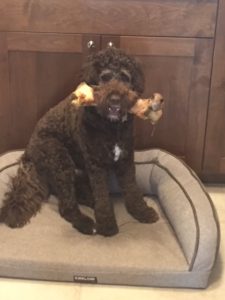
It’s a Saturday morning; and as I do every day, I took Chewie (our Star Wars named Aussie Labradoodle) for a walk.  Usually we depart at 7:00a.m.—his clock is even better than mine, so he reminds me if I’m running late.  A cold wind is howling from the north—it rained last night so the smells are vibrant and it’s good to have the wind in our faces.

Chewie

We are in a newer development, and model homes sit like vacant property a short distance away.  A large flagpole is there with the stars and stripes flapping with gusto in the wind; the rope clanking on the pole.  Usually, I see a few folks out walking—sometimes with their dog.  This morning, I feel like the only person alive.  I can tell folks are looking out their windows—drapes drawn.  We all wonder when this pandemic will fade into the past and life can resume.

This forced “pause” is causing many of us to re-evaluate our relationships, our values, our purpose.  Many sit at home this morning, having lost their jobs for the moment.  I pray how I can help relieve the burdens of those I know, and yet maintain the social distancing and such.  These are unprecedented times.  I’m passing time when I can’t focus on much by watching golf on TV from a year ago.  It relaxes me and helps me to dream of a new day; plus, at my age I can’t remember who won last year anyway.

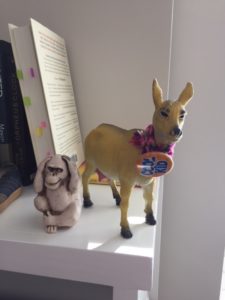
I have a dear friend in New Hampshire, Rabbi John Borak.  He had a “down” day recently, like many of us.  He has two friends in his reading area, a Ganesh (a piece of art from India, given by a Hindu friend), and a cheap lime-green solar powered toy cactus which stands beside Ganesh who John named Pepe.  Pepe wears a yellow sombrero with a red stripe and dances when the sun is bright.  John mourns the loss of normalcy, yet Pepe and Ganesh are unaffected.  I too have a couple of friends in my office that remind me of perspective:  a goat named Gonzales, and an ape named happy.  Gonzales was a gift from my son who took the goat all over Chile for two years.  I don’t know who gave me happy, but together, they solve many of life’s issues.  I stare at them from my writing perch and receive inspiration from them from time to time. 

Happy & Gonzalez

Chewie senses some anxiety I’m sure, but he shows no signs of it as long as he has a bone in his mouth.

Talking about perspective in these strange times, I’ve been reading of the CLOTILDA, the last slave ship to reach the U.S. shores in the mid 1800’s, years after slavery was illegal—and the horrendous and challenging lives these 108 captives had as they were “sold” into slavery.  Over time, many were freed and told their story.  To imagine in our day, that this evil practice—-called “America’s original sin” actually existed, is haunting to me.  Couple this with a book I’m reading Unknown Valor, by Martha MacCallum, which talks about the cruel and inhumane treatment of prisoners of war by the Japanese during the WWII era…..then even though this pandemic is no small matter, it doesn’t seem to compare to what other humans have had to live thru and endure over history.  Martha’s book is about those who rose above these horrors to demonstrate uncommon valor.

I suppose our lives will be forever changed by all of this, and that the New Now—will shape how we live our lives moving forward.  It’s a great time to put in perspective our challenges—enjoy the unjudging guidance of Ganesh, Pepe, Gonzales, and Happy, and enjoy the space we are in (like Chewie).  Not easy—but possible to emerge to the other side, better human beings by experiencing the journey.